
Last updated November 3, 2026
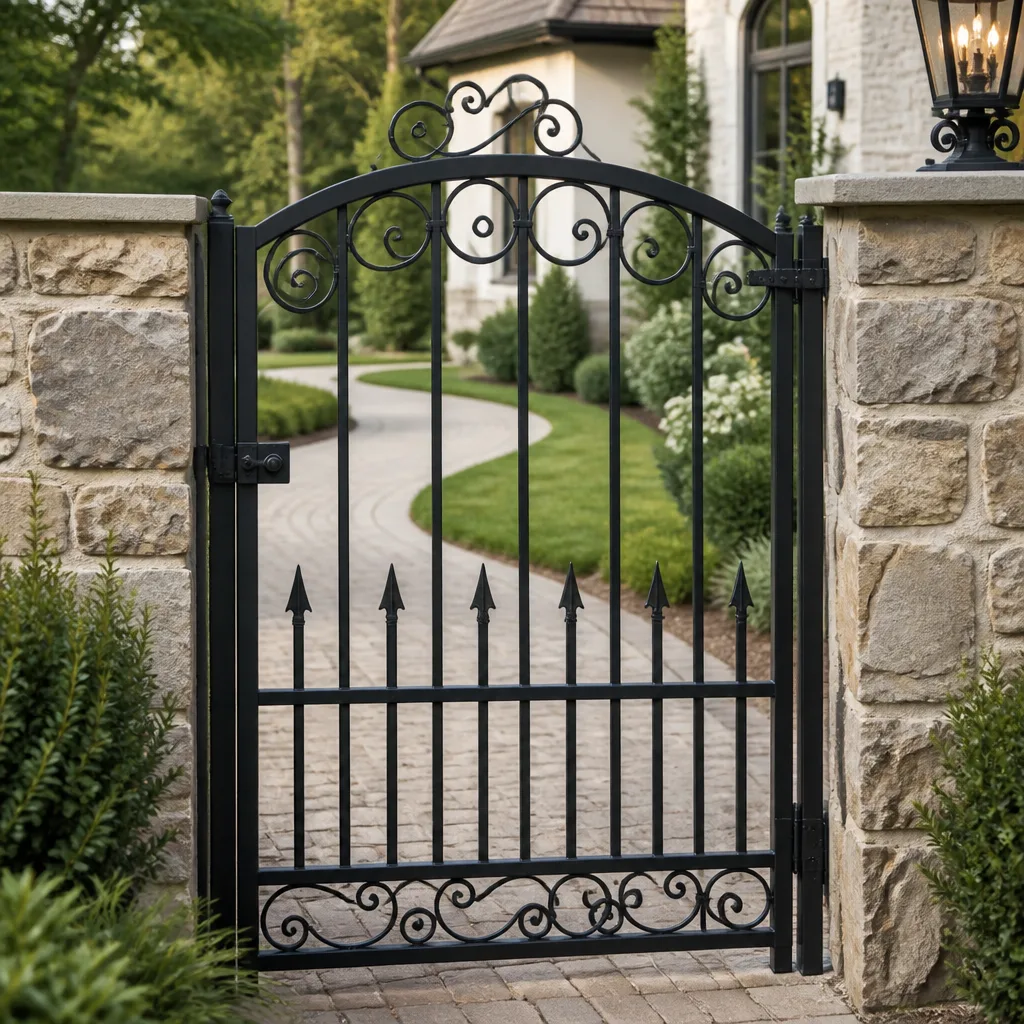 Wrought iron
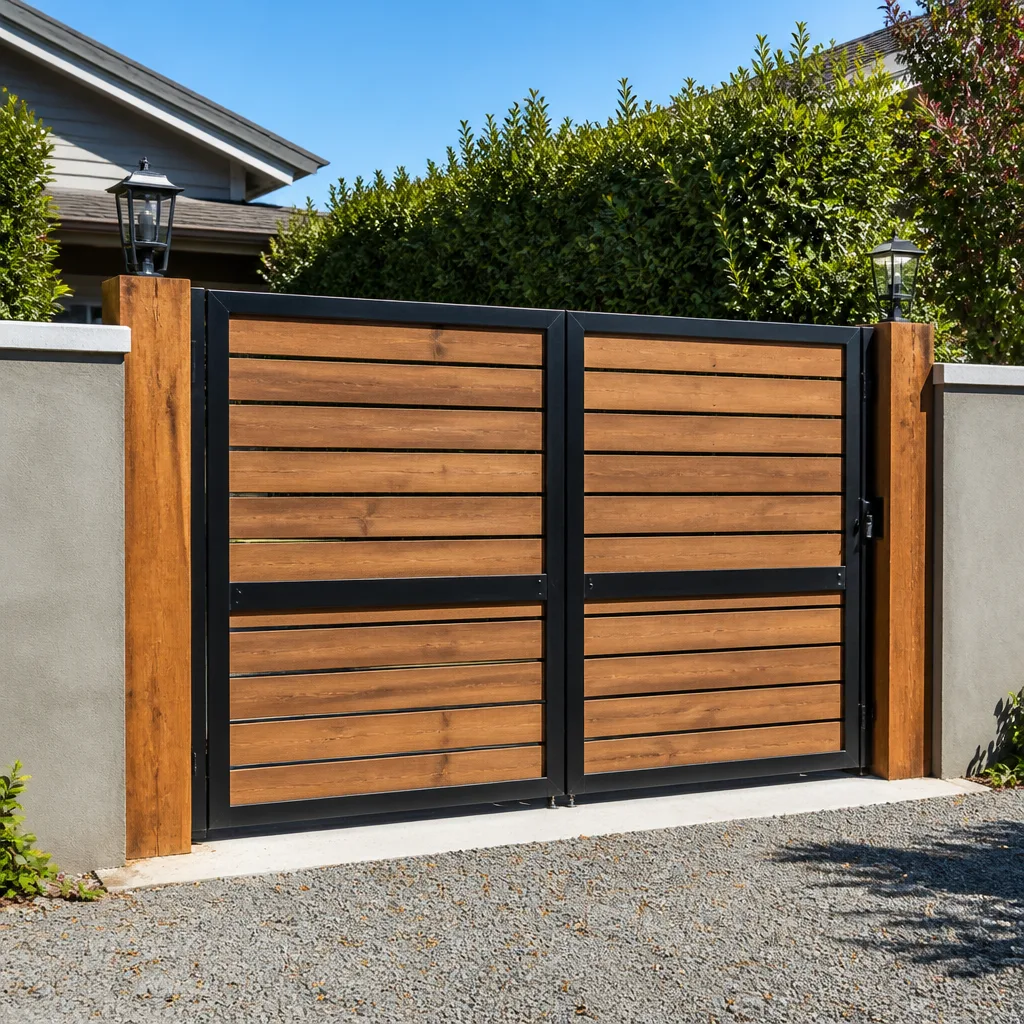 Wood & steel frame
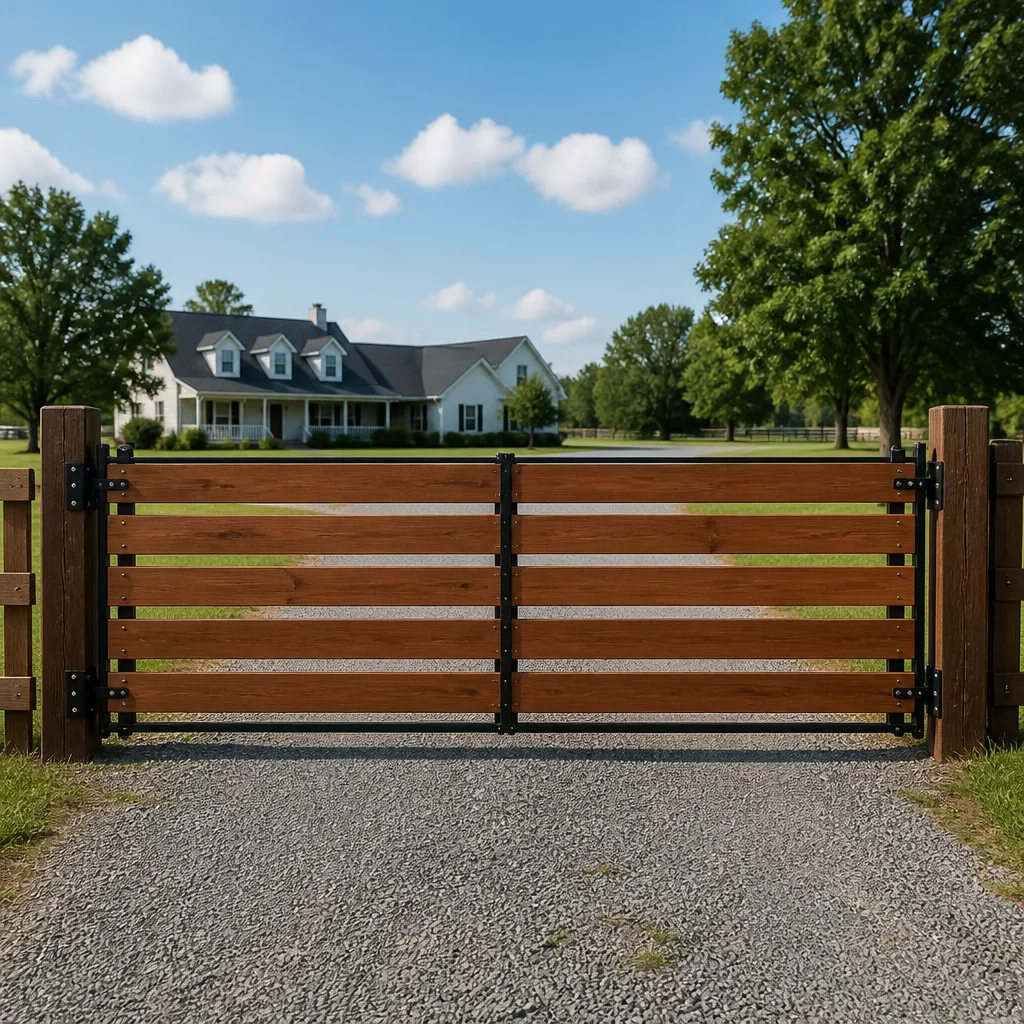 Farm & ranch
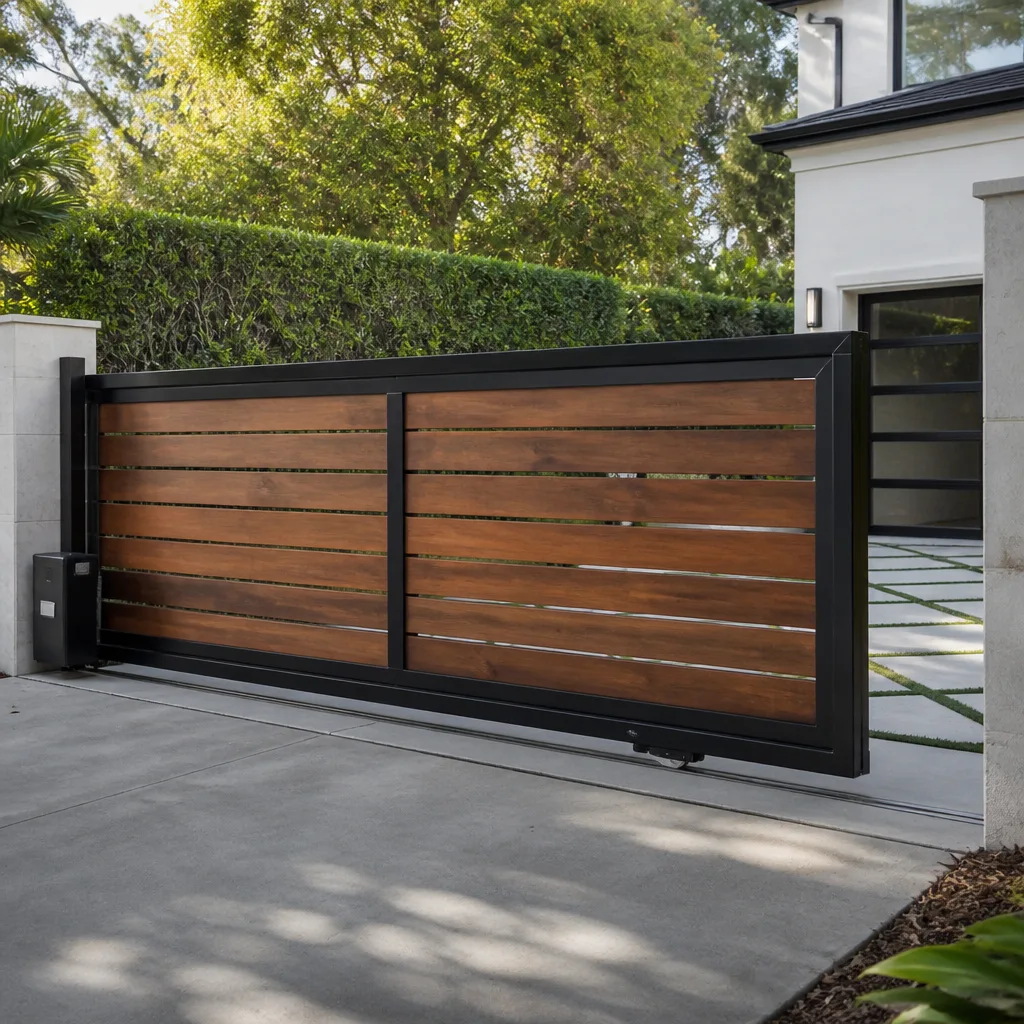 Sliding driveway gates
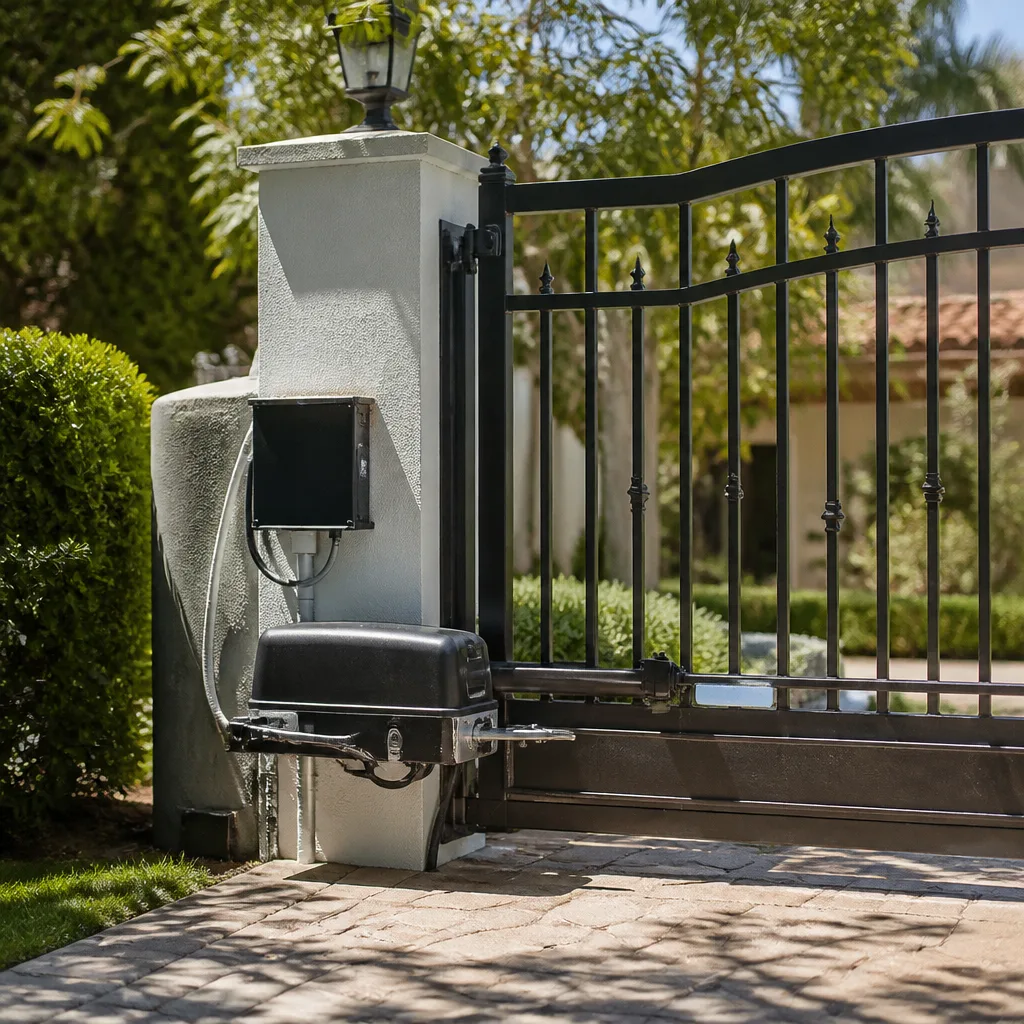 LiftMaster operators
Free on-site gate assessment - hinges, posts, and your LiftMaster or Nice gate operator checked before anything is quoted
The assessment is free and the quote is the invoice.
Get your free estimateThe Complete Gate Repair Guide for Upland Homeowners
Upland sits on expansive clay soil that can shift a gate post a full inch between wet and dry seasons, and most repair quotes never account for that. That’s why the same gate breaks again six months after it was “fixed.” This guide explains what actually goes wrong with gates in this specific climate, how to tell a mechanical problem from an electrical one, and what a repair that lasts more than one season actually looks like. For The Complete Guide to Gate Repair in Upland and deeper coverage, see our full resource. You’ll learn the real failure points for swing gates, slide gates, and barrier arms in Upland’s heat and dust, plus a maintenance calendar that matches our actual weather patterns.
Styles & brands we work with
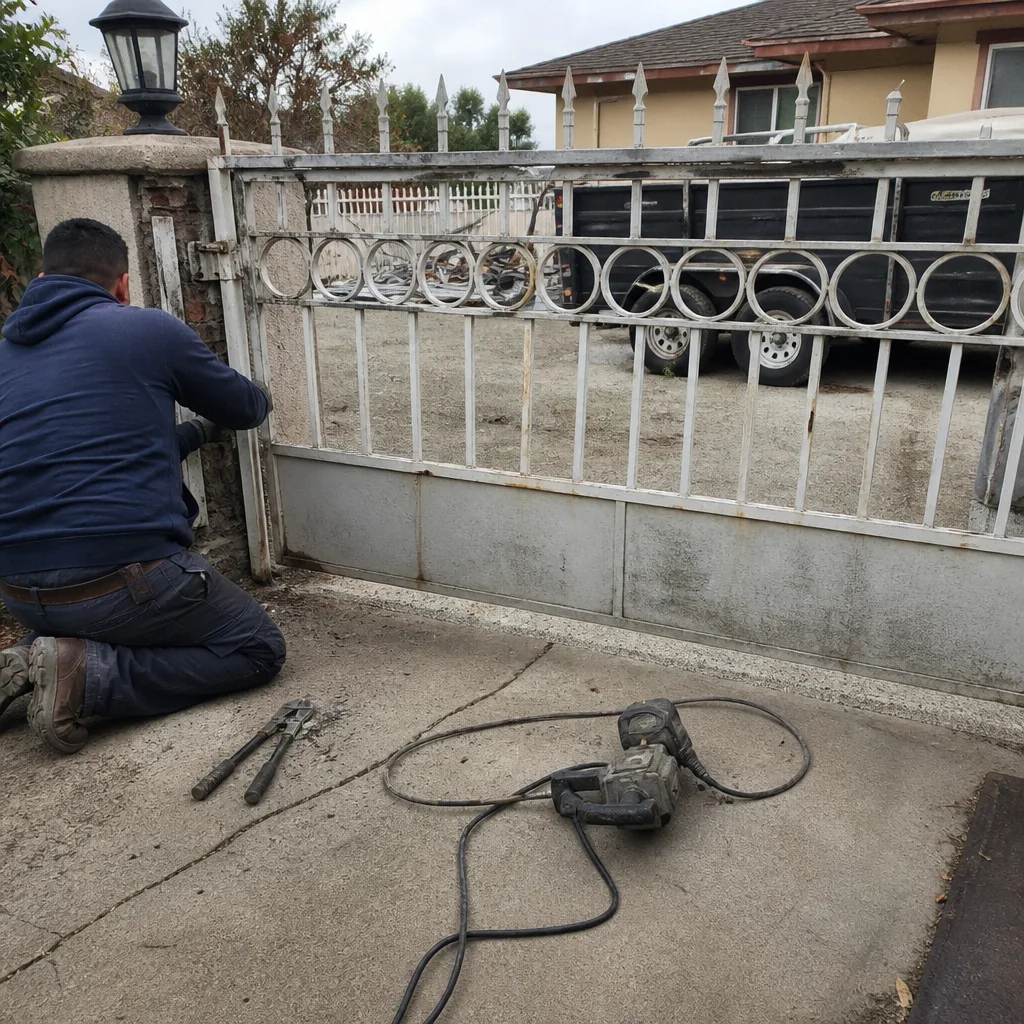
- Wrought iron
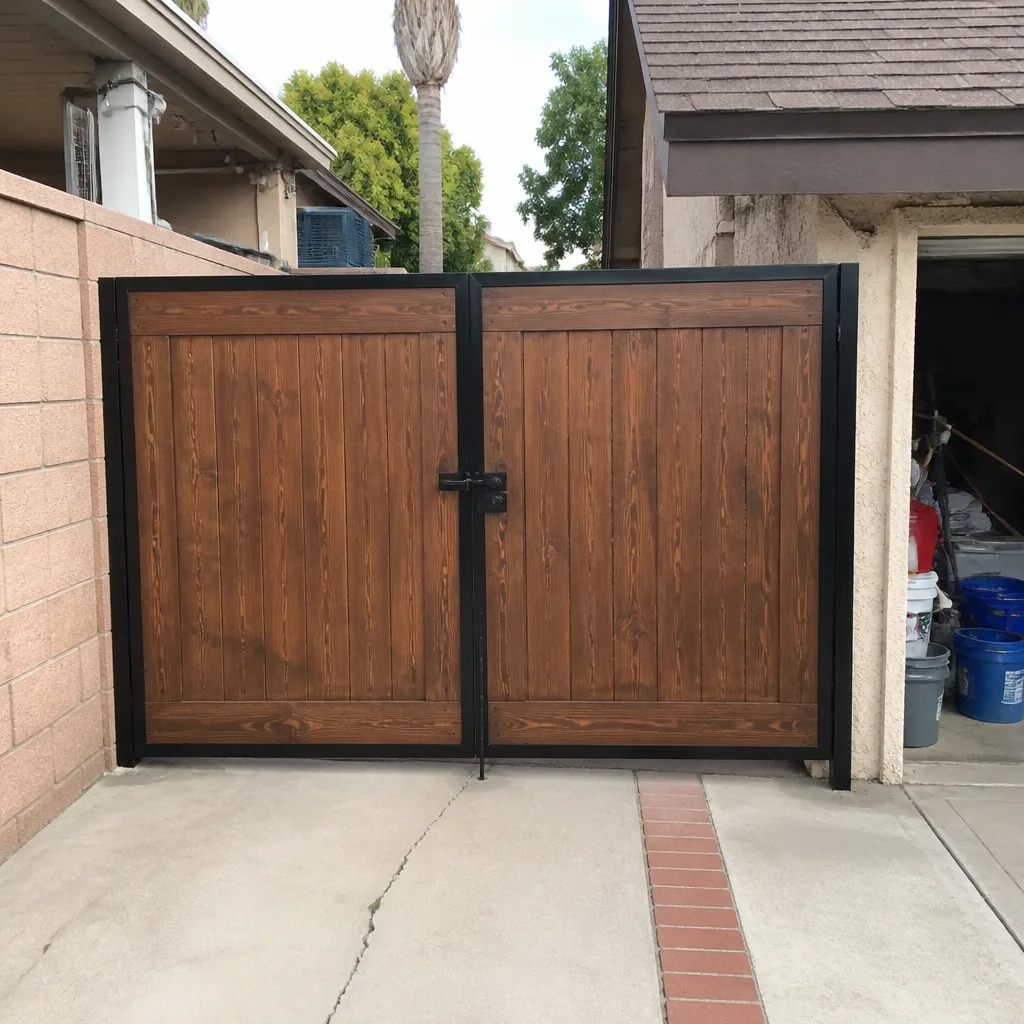
- Wood & steel frame
- Farm & ranch
- Sliding driveway gates
- LiftMaster operators
Quick Answer
Gate repair in Upland usually comes down to one of three root causes: post movement from expansive clay soil, heat stress on operator electronics, or dust intrusion into sensors and moving parts. The fix that lasts is the one that addresses the root cause, not just the symptom. Falcon Gate Repair is a gate-only specialist in Upland that offers our Gate Repair services for nine major operator brands, from Mighty Mule to FAAC, and provides free estimates at (833) 918-6938.
Table of Contents
- How Upland’s Soil Damages Gates
- Swing Gate Failures in Upland’s Climate
- Slide Gate Problems Specific to Upland
- Overhead Barrier Arms in High Heat
- Mechanical vs. Electrical: How to Tell the Difference
- What a Legitimate Repair Scope Looks Like
- The Upland Gate Maintenance Calendar
- Common Mistakes to Avoid
- When to Call a Professional
- Frequently Asked Questions
- The Bottom Line
How Upland’s Soil Damages Gates
Upland is built on clay-heavy alluvial soil that expands when wet and contracts when dry. A single season of winter rain followed by a dry summer can move a gate post enough to throw a swing gate out of alignment by half an inch or more. Half an inch doesn’t sound like much until you realize that’s the difference between a latch that catches cleanly and a latch that misses entirely, or between a gate that swings freely and one that drags across the driveway.
The mechanism is straightforward. Expansive clay absorbs water during Upland’s winter rain cycles. The soil swells, pushing against the concrete footing that holds the post. When summer comes and the soil dries out, it shrinks and pulls away, leaving the footing slightly less stable than it was the previous season. Over several years, the cumulative movement is enough to lean a post, crack the concrete collar around it, or shift the entire gate frame out of square.
What this means practically is that a gate that was perfectly aligned in March may be binding by August. Technicians who work only on hinges and latches without checking post stability are treating the symptom. In our experience at Gate Repair in Upland, a repair that ignores the footing is a repair that gets called back within a year.
Key Takeaways:
- Upland’s clay soil moves between wet and dry seasons, and that movement transfers directly to gate posts.
- Post movement often shows up as a gate that worked fine in spring but drags or fails to latch by late summer.
- Any legitimate repair assessment in Upland should include a check of post plumb and footing stability.
- Ignoring the foundation means repeating the same repair on a seasonal cycle.
Swing Gate Failures in Upland’s Climate
Swing gates are the most common residential gate type in Upland, and they fail in predictable ways here. A swing gate is a lever. The post is the pivot point, and every time the gate opens or closes, the force of that long lever arm is transmitted through the hinges to the post and into the footing. When the footing is compromised by soil movement, the hinge side drops, and the latch side rises. That’s the classic “my gate won’t latch anymore” complaint.
Heat is the second factor. Swing gate operators, whether they’re piston-driven or arm-driven, contain a motor that generates heat as it works. When ambient temperatures in Upland push past 100 degrees in July and August, the operator’s thermal protection circuit may trip more easily, especially if the gate is slightly out of balance. A gate that binds slightly because of a sinking post forces the motor to work harder, which generates more heat, which trips the thermal cutoff. The homeowner sees a gate that works in the morning and quits in the afternoon. That pattern is a strong signal of heat-related operator stress, often made worse by an underlying mechanical issue.
Dust is the third environmental factor Upland gate owners deal with. Santa Ana winds and dry conditions put fine particulate matter into every crevice. On a swing gate, that dust collects on the operator’s travel stops, limit switches, and pivot points. The result is creaking, grinding, and false limit signals.
The typical swing gate failure sequence in Upland looks like this:
- Post shifts slightly during a wet-dry cycle, putting the gate out of square.
- Out-of-square puts extra load on the hinges and the operator.
- Summer heat increases the operator’s internal temperature, and the extra load pushes it past the thermal cutoff.
- Dust accumulation on sensors and switches compounds the problem, causing intermittent false stops.
- The homeowner experiences a gate that works intermittently, then stops entirely.
If you have a swing gate with a LiftMaster operator that’s behaving this way, the answer usually involves resetting the gate geometry first and checking the operator’s condition second. A gate that’s square and balanced may not need a new operator at all.
Slide Gate Problems Specific to Upland
Slide gates have a different relationship with Upland’s soil than swing gates do. A slide gate doesn’t pivot on posts, but it does travel on a track that runs parallel to the ground. If the ground under any section of that track shifts, the track develops a low spot or a high spot, and the gate’s rollers hit it every time the gate opens or closes.
Clay soil is particularly bad for this. When the ground under a low spot in the track swells from winter rain, the track rises. When summer dries it out, the track drops again. The gate then has to climb over a hump or dip through a valley on every cycle. Homeowners notice it first as a hesitation, then as a grinding sound, and finally as a gate that stalls out halfway through its travel.
Slide gates in Upland also suffer from debris intrusion in a way swing gates don’t. A slide gate’s track is essentially a trough that catches leaves, gravel, and blowing dust. In a windy fall, a track can fill with enough debris to interfere with the rollers in a matter of weeks. That’s why slide gate track maintenance is more frequent and more important in Upland than it is in coastal cities with less wind and less dust.
The other common slide gate failure point here is the operator’s chain or belt drive. High heat softens lubricants, which then collect dust, forming a paste that gums up sprockets and idler pulleys. The fix is usually a thorough cleaning and replacement of the lubricant with a product suited to high-heat, high-dust environments.
If you have a slide gate, the highest-value maintenance you can do in Upland is keeping the track clear and checking that the ground under the track has not moved. A five-minute visual check each month prevents most of the expensive slide gate repairs we see.
Overhead Barrier Arms in High Heat
Overhead barrier arms, also called cantilever gates, are common on Upland properties where a driveway crosses a slope or where a rolling track would be impractical. These gates are supported by posts on one side only, with no track on the ground. That makes them much less vulnerable to soil movement, which is a genuine advantage in Upland’s clay soil. But they have their own set of failure points, and heat is the biggest one.
The cantilever design means the entire weight of the gate is carried by the post and counterweight assembly. If the gate was not counterweighted correctly at installation, or if the counterweight has shifted over time, the gate leans and puts excessive lateral load on the roller trucks. In summer, that load increases because metal expands in the heat, changing the geometry of the moving parts by a few thousandths of an inch. That’s enough to turn a smooth-traveling gate into one that binds at the far end of its travel.
The operator on an overhead barrier arm is also more exposed to direct sun than an operator mounted near the ground on a swing gate. We’ve seen Upland barrier arm operators with internal temperatures well above their rated maximum on August afternoons, which shortens the life of capacitors and control boards. If your barrier arm works fine at 8 a.m. and stops working at 2 p.m., then works again at 9 p.m., you are looking at a heat-related electrical failure, not a mechanical one.
The third common overhead gate issue in Upland is dust in the roller assemblies. The roller trucks on a cantilever gate are enclosed, which protects them from debris but also traps heat and allows dust to accumulate inside the enclosure. Cleaning and re-greasing these rollers is a regular maintenance task that most homeowners never do, and the result is a roller seizure that can require a full truck replacement.
Mechanical vs. Electrical: How to Tell the Difference
Before calling anyone, it helps to know whether your gate’s problem is mechanical or electrical. The distinction matters because it determines who you call and what the repair will involve. A mechanical problem is in the physical structure: posts, hinges, rollers, track, chain, or gate frame. An electrical problem is in the operator, control board, sensors, keypad, or power supply.
Here is a practical way to distinguish them:
If the gate moves but makes noise, that’s mechanical. Grinding, creaking, scraping, or a gate that visibly struggles to move usually means a binding hinge, a dry roller, a track obstruction, or a post that has shifted. The electrical system is doing its job; the mechanical system is fighting it.
If the gate doesn’t move at all, that could be either. A completely dead gate might mean the operator has no power, the control board has failed, or the gate is mechanically jammed so thoroughly that the motor cannot overcome the resistance. Check whether you hear a hum or click when you press the button. A hum suggests the motor is getting power but cannot move the gate, which is often mechanical binding. Silence suggests an electrical issue.
If the gate moves erratically, that’s usually electrical. A gate that starts and stops unpredictably, reverses for no reason, or responds intermittently to the remote or keypad is showing electrical symptoms: a failing control board, a loose wire connection, a bad safety sensor, or a remote receiver that’s picking up interference.
Here’s a simple diagnostic sequence to work through:
- Open and close the gate manually using the release handle. If it moves freely by hand, the problem is electrical. If it’s hard to move by hand, the mechanical structure has an issue.
- Listen for a hum or click when you press the button. Hum = motor power, possible mechanical jam. Click with no movement = possible capacitor or motor failure.
- Check the safety sensors. Upland’s dust often coats the sensor lenses, and a dirty sensor will prevent the gate from closing. Wipe them clean and try again.
- Check the keypad and remote batteries. A dead remote is the most common “electrical problem” that isn’t actually a problem with the gate.
- Look at the gate’s posture when closed. If the gap between the gate and the latch post is uneven top to bottom, you have a post alignment issue, which is mechanical.
If you have a BFT or FAAC operator and the gate is behaving erratically, the fix may be a board reprogramming rather than a physical repair. That’s the value of working with a company that knows those brands specifically, which is how Electric Gate Repair in Upland approaches diagnostics.
What a Legitimate Repair Scope Looks Like
A repair that lasts is a repair that addresses the root cause. In Upland, that means any repair quote for a swing or slide gate should include at least a visual inspection of the post footings and track bed, not just the broken part. If the technician doesn’t look at the foundation, they’re not going to fix the problem that caused the failure in the first place.
Here’s what a legitimate repair scope looks like for each gate type:
Swing gate repair scope:
- Check post plumb and footing stability for both hinge and latch posts.
- Inspect hinges for wear, sag, and lubrication condition.
- Test operator force settings and confirm the gate is balanced.
- Check limit switches and travel stops for proper adjustment.
- Inspect wiring connections for corrosion or loosening from vibration.
- Test safety sensors and auto-reverse function.
- Apply lubricant appropriate for high-heat, high-dust service.
Slide gate repair scope:
- Inspect the full track run for level, straightness, and debris.
- Check the ground under the track for signs of heave or settlement.
- Inspect rollers and guide wheels for wear and lubrication.
- Check chain or belt tension and sprocket wear.
- Inspect operator mounting bolts for loosening.
- Test limit switches and safety loops.
- Clean and re-lubricate drive components.
Overhead barrier arm repair scope:
- Check counterweight condition and gate balance.
- Inspect roller trucks for smooth travel and adequate lubrication.
- Check operator mounting and alignment.
- Inspect control board for heat damage or capacitor swelling.
- Test safety edges and photocells.
- Clean roller enclosures of accumulated dust.
A repair quote that covers only the broken hinge or the dead control board is an incomplete quote in Upland’s environment. The soil and the heat will stress the replacement part the same way they stressed the original one. We see this pattern constantly: a homeowner gets a hinge replaced in summer, the gate works for a few months, then the same hinge fails the following spring because the post it was mounted to had shifted and was never corrected. The legitimate fix was to reset the post, not just replace the hinge.
This is also where the repair versus replace decision gets made. If a gate post has shifted more than a certain amount, or if an operator has failed twice in three years, the long-term economical choice may be a new install. Falcon Gate Repair works both sides of that decision, so we can tell you honestly whether your gate is worth repairing or whether your money is better spent on a new system. We handle both Gate Installation in Upland and repairs, so the recommendation never comes with a conflict of interest.
The Upland Gate Maintenance Calendar
Every climate has a maintenance rhythm, and Upland’s is shaped by three major weather patterns: winter rain that swells the soil, summer heat that stresses operators and electrical components, and fall Santa Ana winds that drive dust and debris into every mechanism. Matching your gate maintenance to these seasons prevents most of the failures we see in this city.
January through March (rain season):
- After periods of heavy rain, check that water is not pooling around gate posts or operator enclosures. Standing water against a footing accelerates soil movement.
- Check the gate’s posture. If it’s binding after a wet period, the soil has likely shifted the footing. Have it checked before the damage compounds.
- Inspect operator housings for signs of water intrusion. A cracked cover or failed gasket during Upland’s rain months leads to board corrosion later.
- Test the gate’s auto-reverse and safety sensors, since wet conditions can affect sensor performance.
April through June (transition and early heat):
- Clean and lubricate all moving parts: hinges, rollers, chains, and sprockets. Use a lubricant rated for high-temperature service.
- Clean safety sensor lenses and photocell covers of accumulated winter and spring dust.
- Check the gate balance. A gate that has drifted out of balance after the wet season will fail in the summer heat.
- Inspect the track on slide gates for debris that accumulated over winter.
July through September (peak heat):
- If your gate stops working in the afternoon but works in the morning, suspect heat-related operator failure. Don’t ignore the pattern.
- Check that operator enclosures are not in direct afternoon sun if possible. A simple shade structure can extend the life of a control board by years in Upland.
- Monitor the gate for any change in travel speed or sound. Increased noise in summer usually means heat-thinned lubricant or heat-expanded components binding.
- Keep slide gate tracks clear, since summer dust can build up quickly with dry conditions.
October through December (Santa Ana season):
- Clean everything. Santa Ana winds carry fine dust that coats sensors, clogs track rollers, and works into limit switch housings.
- Check that all fasteners are tight. Wind vibration loosens bolts on gate operators, hinges, and mounting brackets.
- Remove leaves and debris from slide gate tracks and operator areas before the rain season begins.
- Test the complete auto-close cycle and safety features before winter weather introduces new variables.
For most Upland homeowners, this schedule takes about 30 minutes per season. For gates that see heavy daily use, or for commercial gates with multiple users, more frequent attention is appropriate. The cost of this maintenance is trivial compared to the cost of a failed operator or a collapsed gate.
Common Mistakes to Avoid
- Treating the symptom without checking the post. Replacing a hinge or adjusting a latch on a gate whose post has shifted out of plumb is a temporary fix. The gate will misalign again within months. A legitimate Upland gate repair always starts with a check of the foundation and post condition.
- Lubricating with the wrong product. Standard household lubricants attract dust and turn into abrasive paste in Upland’s dry, windy conditions. Use a dry-film or high-temperature lubricant designed for gate and garage door mechanisms.
- Ignoring the heat-related afternoon shutdown pattern. A gate that stops working at 2 p.m. and works again at 8 p.m. is not “fixed itself.” That’s a thermal protection circuit struggling with an overloaded or aging operator. Waiting until it fails entirely usually means a full operator replacement instead of a component repair.
- Forcing a binding gate. If your gate is struggling to move, holding the button down to force it through the travel cycle stresses the motor, the gears, and the control board all at once. Release the gate and call for service before turning a $200 hinge issue into a $1,500 operator replacement. This is especially important with high-tension systems like cantilever counterweights, where forcing a jammed gate can cause serious injury or equipment damage.
- Skipping the release handle check. If you never test the manual release, you won’t know whether your gate can be opened by hand in a power outage. In Upland, where Santa Ana winds can knock out power, this matters. Test it seasonally.
- Hiring a generalist for a branded operator. A FAST or LiftMaster operator has specific diagnostic procedures and failure modes. A general handyman who has never worked on your brand will often replace parts that don’t need replacing. Find a gate specialist who knows your operator’s brand logic.
- Delaying a repair on a gate that still works. A gate that’s slightly noisy, slightly slow, or slightly misaligned is communicating. The problem is compounding, not self-correcting. The cheapest repair is the one you make before the failure is complete.
When to Call a Professional
Some gate issues are safe to investigate on your own: checking remote batteries, wiping sensor lenses, clearing debris from a slide track. Others are not. See our DIY vs Professional Gate Repair: The Upland Homeowner’s Decision Guide to know which is which. If your gate’s post has visibly shifted, if the gate is binding badly enough to strain the operator, or if you’re dealing with electrical issues like intermittent power, a failed control board, or a gate that reverses erratically, a professional diagnostic is the right move. Gate operators contain capacitors that can hold a charge even when unplugged, and high-tension components like cantilever counterweights and torsion-style operators are dangerous to work on without training. Falcon Gate Repair offers free estimates in Upland, call (833) 918-6938 to schedule one. We’re gate-only specialists, which means the technician who shows up has seen your type of system before.
Frequently Asked Questions
Gate repair in Upland typically costs between $150 and $450 for common fixes like hinge replacement, sensor cleaning, limit switch adjustment, or control board troubleshooting. Larger repairs, like operator replacement or post resetting, range from $800 to $2,500 depending on the system and brand. Every repair is quoted and agreed before any work begins. Call (833) 918-6938 for a free estimate and an exact price for your specific gate.
Most common gate repairs in Upland can be completed the same day, especially mechanical issues like hinge alignment, track clearing, or sensor cleaning. Operator and control board replacements may require a day for parts. Falcon Gate Repair keeps common components in stock for the brands we service. Call (833) 918-6938 and we’ll tell you honestly when we can be there.
Check whether the gate moves freely by hand using the release handle. If it moves freely, the problem is electrical; if it’s difficult to move, the problem is mechanical. A grinding noise usually indicates a mechanical issue, while erratic or intermittent operation usually indicates an electrical issue. A gate that quits in the afternoon heat and works again at night is showing heat-related electrical stress.
Upland’s summer heat pushes gate operators to their thermal limits, especially when the gate is slightly out of balance or binding. The operator’s thermal protection circuit shuts the motor down to prevent damage, then resets when it cools. The pattern of afternoon failure and evening recovery is a classic sign of heat stress. It also means your operator is working harder than it should, and the underlying cause needs to be found before the operator fails permanently.
Yes, and more than most people realize. Upland’s expansive clay soil swells when wet and shrinks when dry, and that movement is enough to shift a gate post out of alignment over the course of a single wet-dry season. Gates that were perfectly aligned in spring can be binding by late summer. Any legitimate gate repair in Upland should include an assessment of post stability and footing condition.
Yes. Falcon Gate Repair works on Mighty Mule, LiftMaster, FAAC, BFT, and several other major gate operator brands. We diagnose by brand logic, meaning our technicians know the specific failure patterns and repair procedures for each manufacturer rather than applying generic troubleshooting. This matters because a FAAC board failure looks different from a LiftMaster board failure, and the wrong diagnostic can cost you money. Call (833) 918-6938 for a free estimate.
The Bottom Line
Gates in Upland fail for reasons that are specific to this climate and this soil. Expansive clay shifts posts. Summer heat stresses operators. Santa Ana winds drive dust into sensors and mechanisms. The gates that last are the ones maintained on a seasonal schedule and repaired by someone who looks at the foundation, not just the broken part. Whether you need a simple fix or a full replacement, the decision starts with an honest diagnostic. Falcon Gate Repair home offers free estimates for gate repair, electric gate repair, and gate installation in Upland. Call (833) 918-6938 and we’ll tell you what’s wrong and what it costs to fix, before any work begins.
Written by the team at Falcon Gate Repair, serving Upland since 2018. Explore more guides & resources on gate repair and maintenance.
See the difference
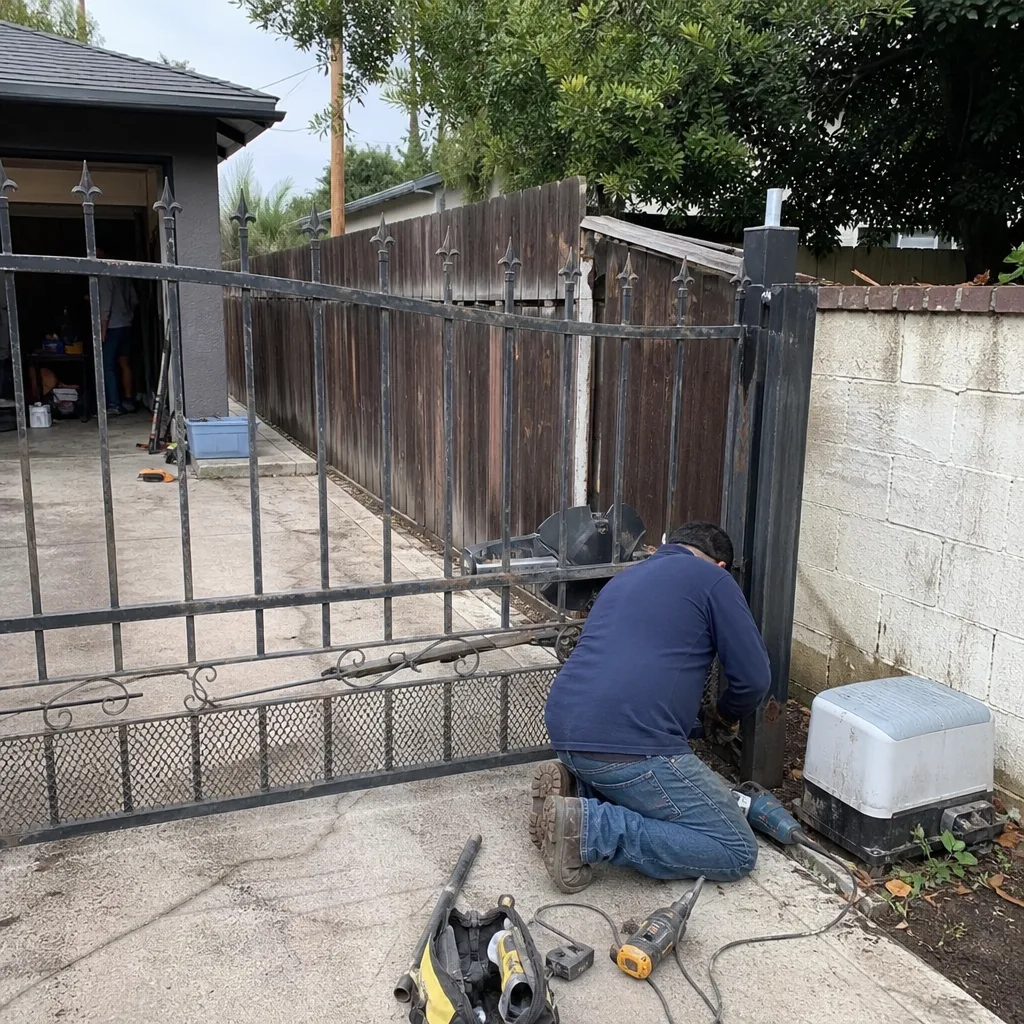 Before
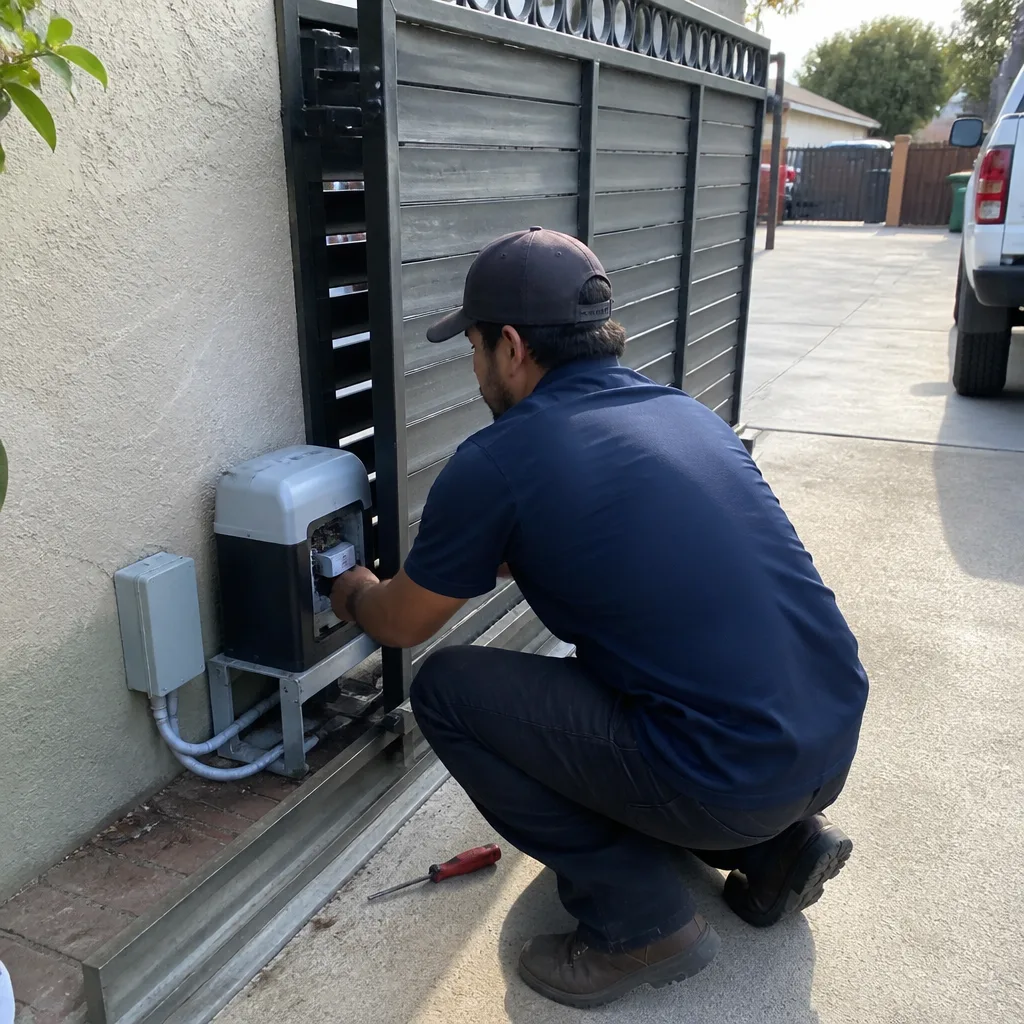 After
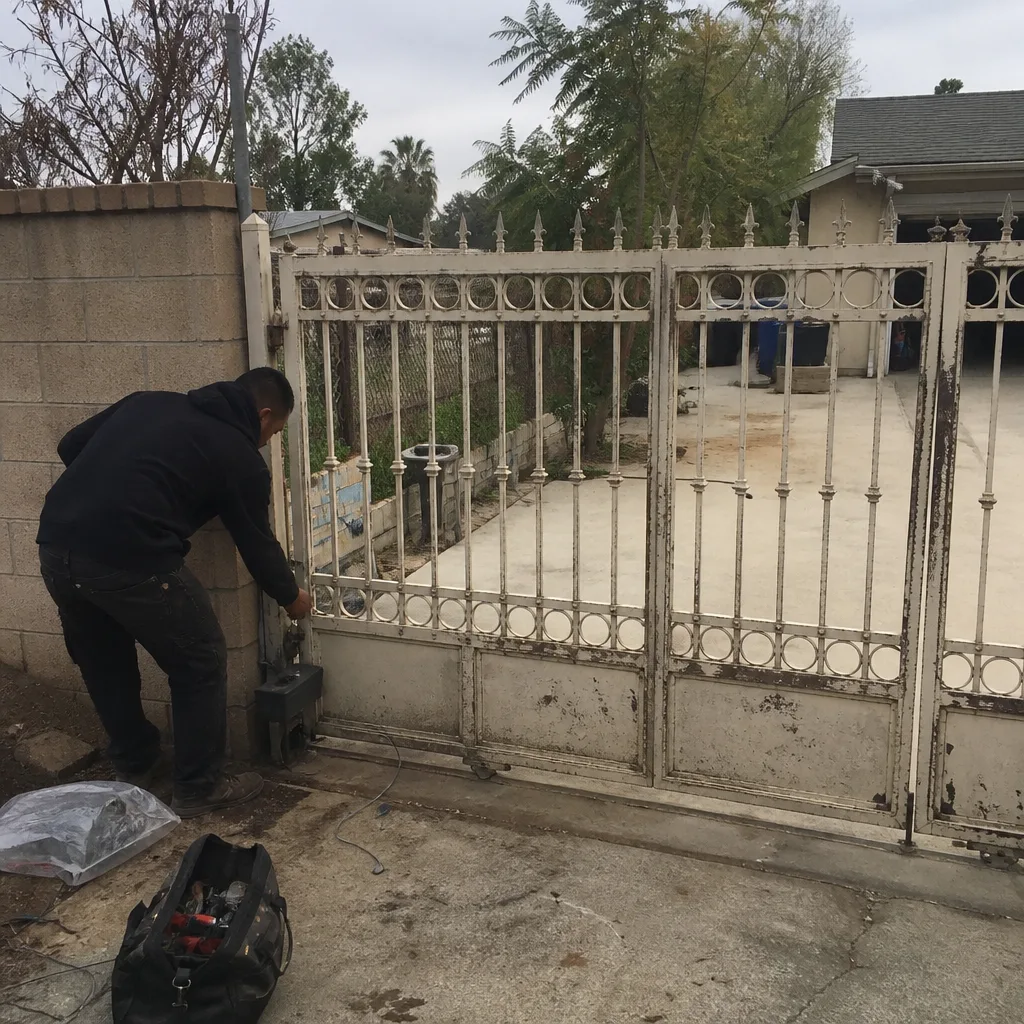 Before
 After
 Before
 After