
Last updated November 3, 2026
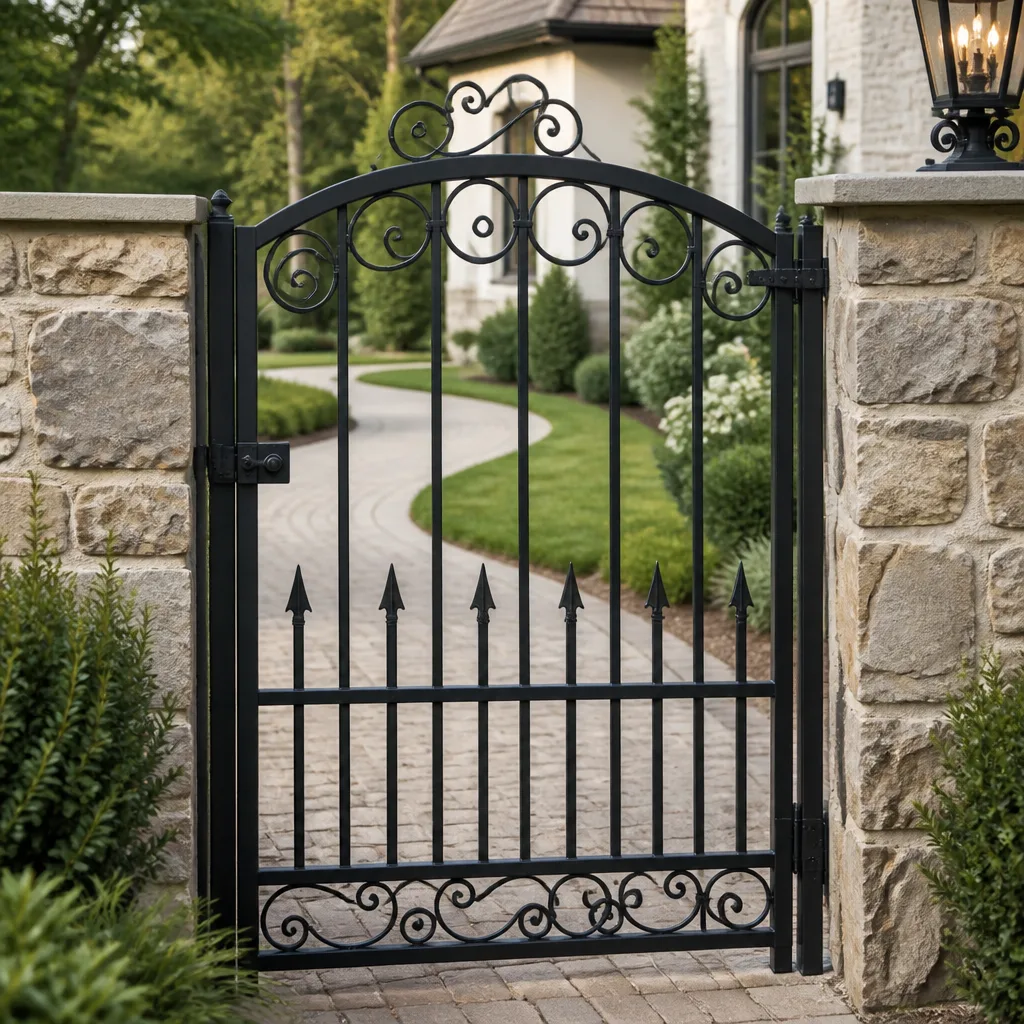 Wrought iron
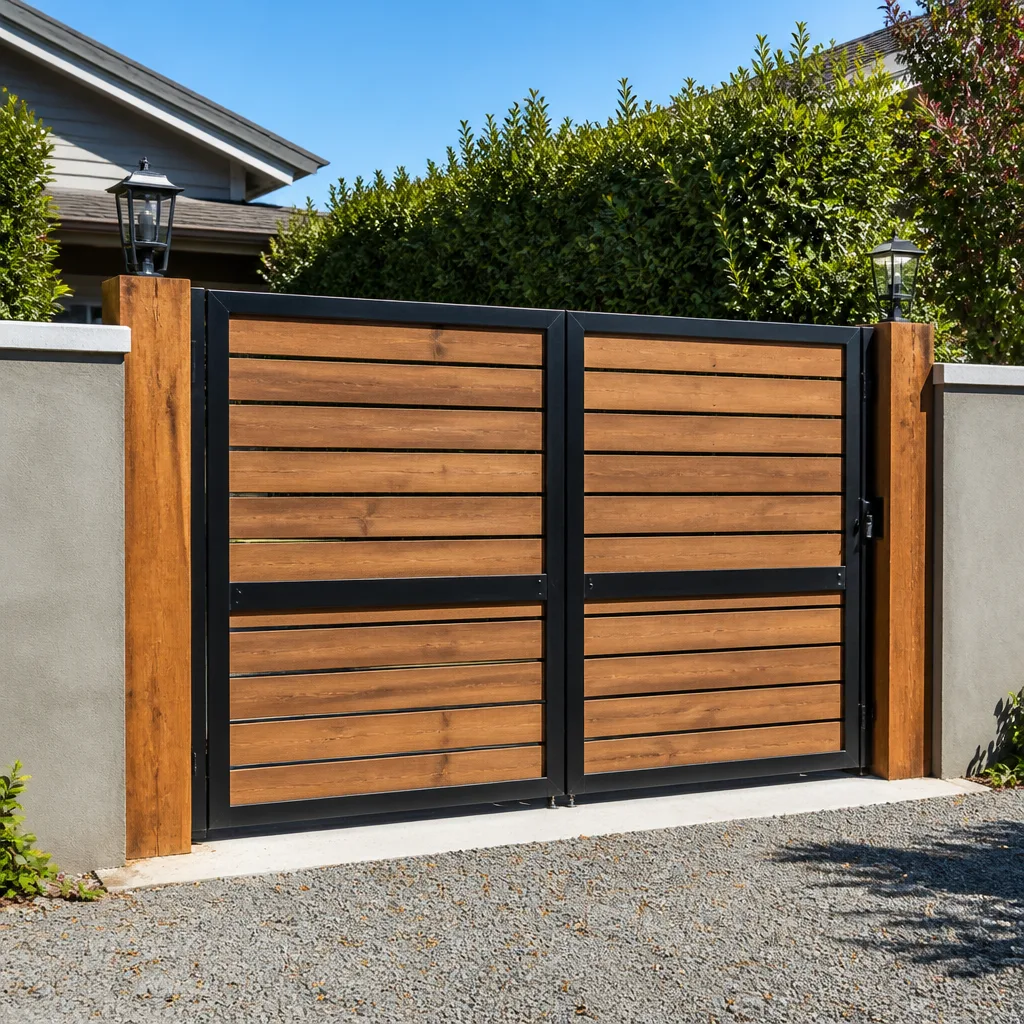 Wood & steel frame
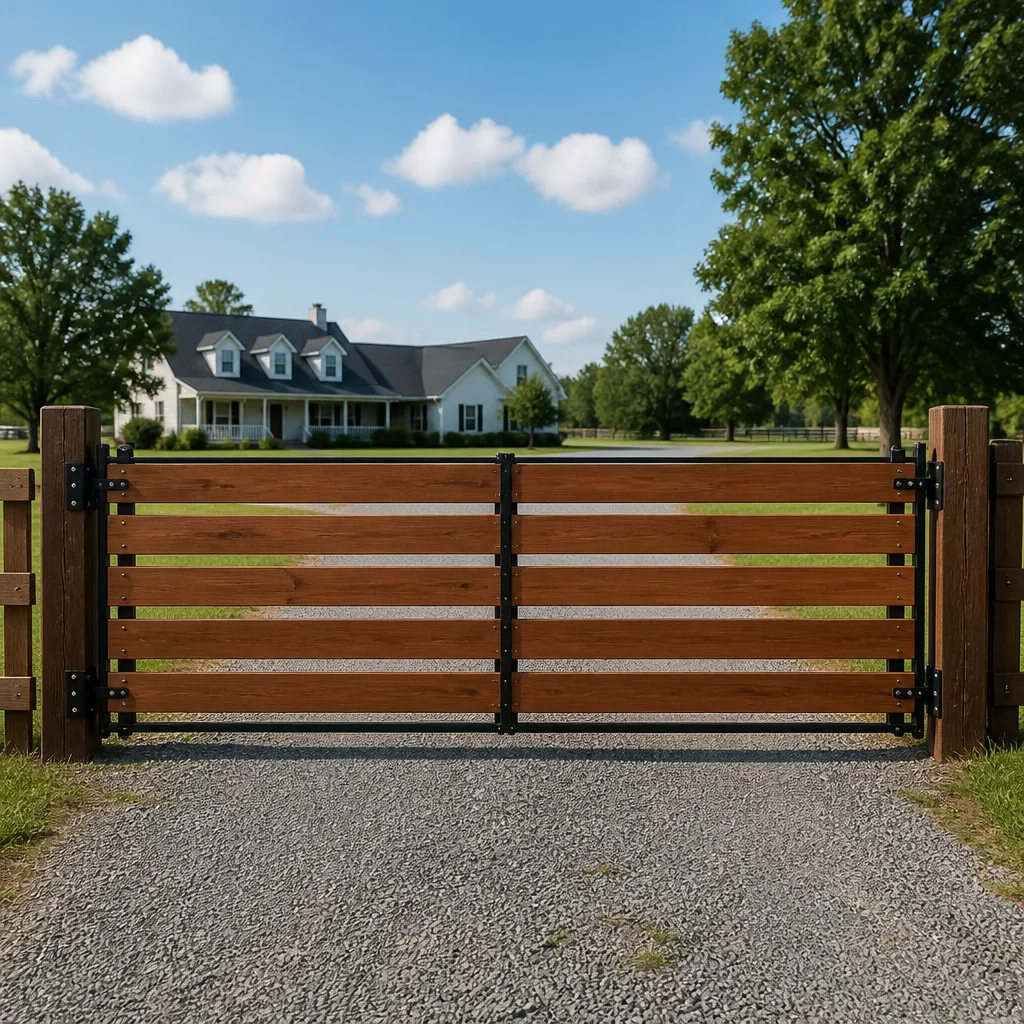 Farm & ranch
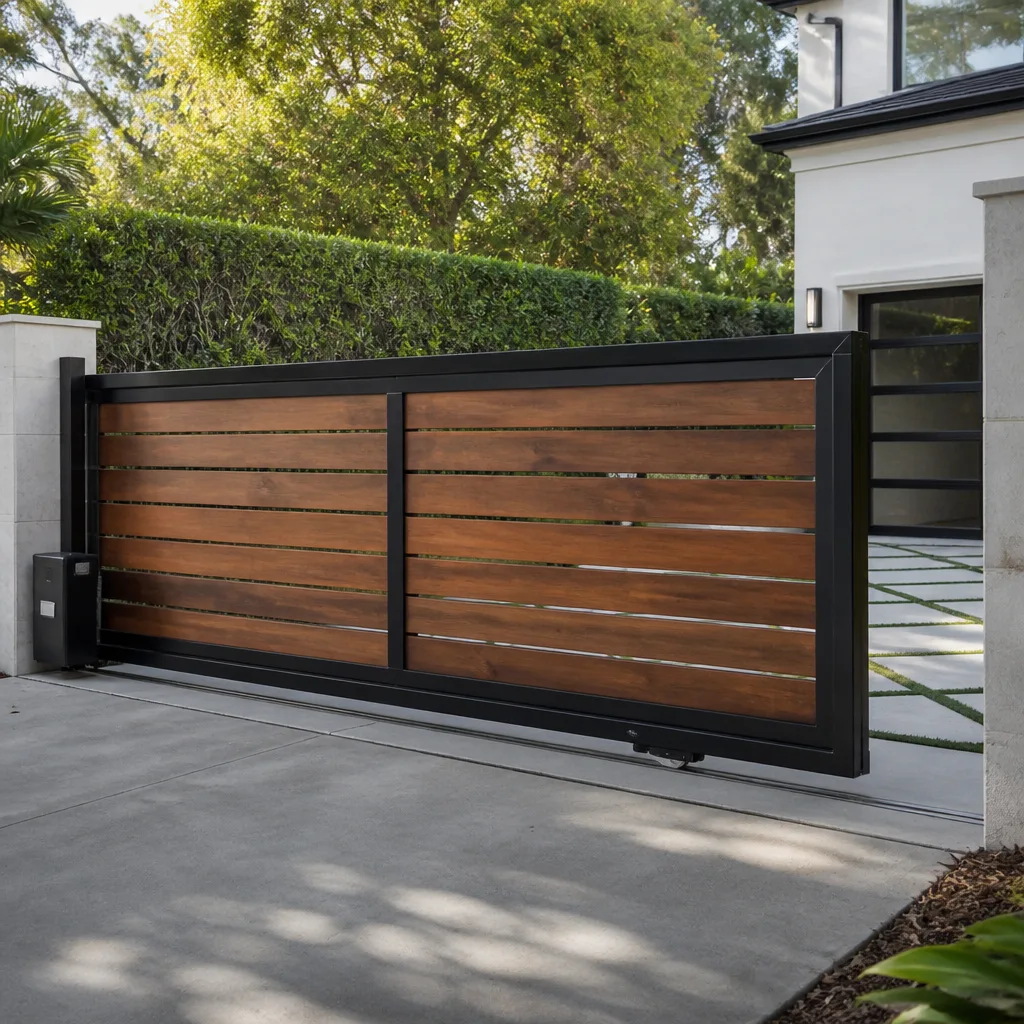 Sliding driveway gates
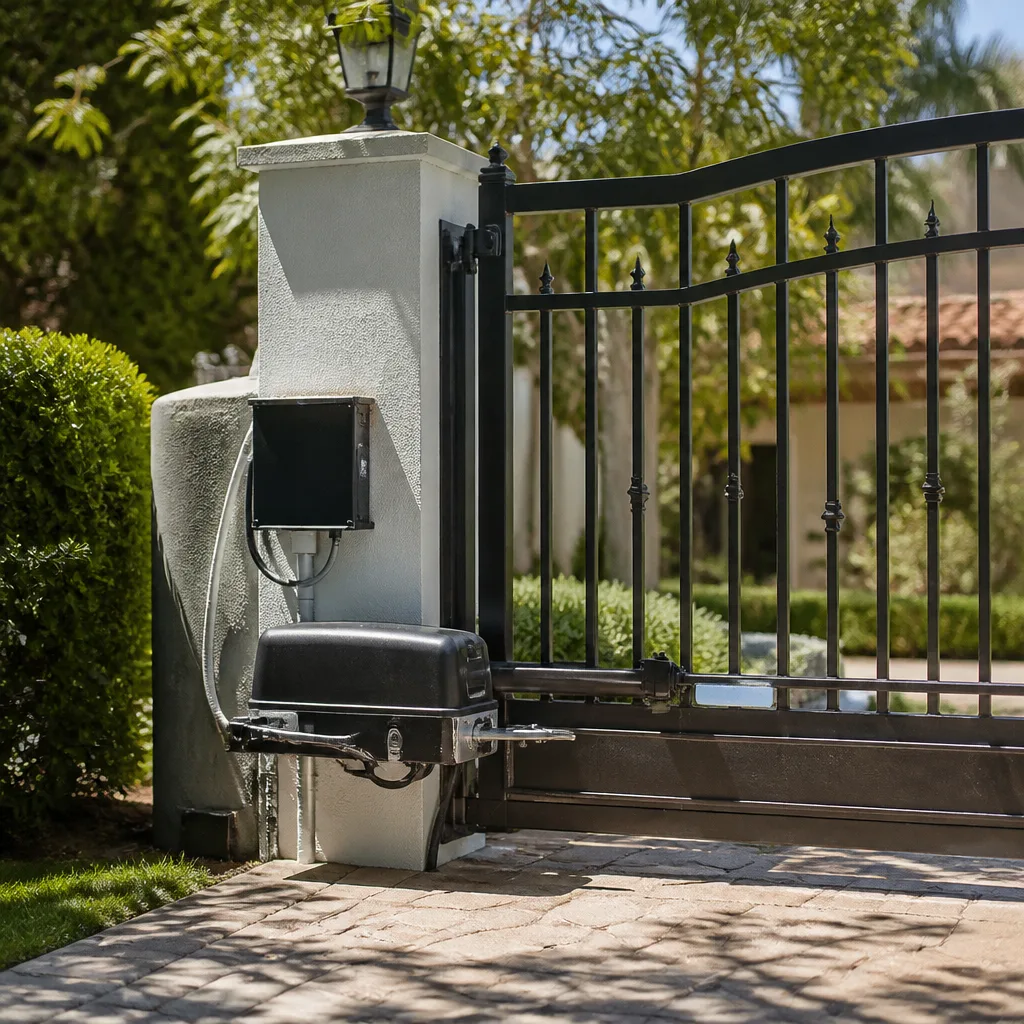 LiftMaster operators
Free on-site gate assessment - hinges, posts, and your LiftMaster or Nice gate operator checked before anything is quoted
The assessment is free and the quote is the invoice.
Get your free estimateChoosing the Right Gate Repair Brand: A Buyer’s Guide for Upland
Here’s a counterintuitive fact about automated gate operators: the brand with the most impressive spec sheet is often the worst financial decision you can make. In Upland, where temperatures swing from frost mornings in January to triple-digit August afternoons, the real question isn’t which motor has the highest horsepower rating on paper. It’s which brand has parts sitting on a shelf within twenty miles of your house when that motor quits on a Tuesday morning. What follows is The Complete Gate Repair Guide for Upland Homeowners, a practical framework for evaluating gate operator brands the way a working technician actually evaluates them: not by marketing language, but by downtime, parts access, and repair economics in the Inland Empire specifically.
Quick Answer
The best gate operator brand for an Upland homeowner is the one with the strongest combination of local parts availability, technician familiarity, and duty-cycle headroom for your usage pattern. For most residential properties in Upland, LiftMaster, DoorKing, and Viking lead that list because they combine proven reliability with same-day parts access throughout the Inland Empire. The right brand also depends heavily on access control goals: if you plan to add a keypad, intercom, or smartphone entry later, choose a brand with open integration paths now.
Styles & brands we work with
- Wrought iron
- Wood & steel frame
- Farm & ranch
- Sliding driveway gates
- LiftMaster operators
Table of Contents
- Why Parts Availability in the Inland Empire Matters More Than Specs
- Brand-by-Brand Breakdown: What We Actually See in Upland
- Duty Cycle: The Spec That Predicts Your Repair Bill
- The Warranty Framework: What ‘Lifetime Motor’ Actually Means
- Access Control Integration: Choosing a Brand With Room to Grow
- How to Evaluate Any Gate Operator Brand in 6 Steps
- Common Mistakes to Avoid
- When to Call a Professional
Why Parts Availability in the Inland Empire Matters More Than Specs
Every gate operator will eventually need a part. That’s not a warning; it’s a mechanical fact. Motors have brushes that wear. Control boards have capacitors that degrade in heat. Limit switches fail after enough cycles. The only variable is how long you wait when the failure happens. In Upland, we’ve watched homeowners with certain imported European brands wait five to seven business days for a circuit board to ship from a regional warehouse on the East Coast while their gate sits propped open with a bungee cord. That’s not a repair; that’s a security gap with a delivery tracking number.
The Inland Empire has a surprisingly concentrated distribution network for gate operator parts. Brands like LiftMaster, Linear, and DoorKing maintain distributor relationships that put common failure parts, control boards, limit assemblies, gear kits, within a day’s reach of most Upland addresses. That’s not luck; it’s because these brands have spent decades building out commercial and residential channels across Southern California. When a technician tells you a part is available same day in Upland, that’s the result of a supply chain decision the manufacturer made years before your gate ever failed. It’s the single most underrated factor in brand selection, and it’s the first thing we check when a customer asks our opinion on operators.
Here’s what to ask any gate company or supplier before you commit to a brand:
- Where is the nearest stocking distributor? If the answer is Phoenix or Dallas, every future repair carries a freight delay.
- What are the top three failure parts for this model, and are they stocked locally? If the answer is vague, the parts aren’t local.
- Does a service tech in Upland carry common parts for this brand on the truck? Truck stock is the fastest repair channel there is. No truck stock means a parts run before any repair.
- How long has this brand been installed in the Inland Empire? Installed base drives distributor investment. Brands that are new to the region haven’t earned downstream parts support yet.
None of these questions appear on a manufacturer’s website. They only get answered by people who actually fix gates for a living. And they matter far more than whether a motor is rated at 1/2 horsepower or 3/4 horsepower, because a motor that’s down for five days is worth zero horsepower while it waits. For Gate Repair services that minimize downtime, local expertise matters more than specs.
Brand-by-Brand Breakdown: What We Actually See in Upland
We work on nine gate operator brands regularly: LiftMaster, FAAC, BFT, Linear, Viking, Ghost Controls, DoorKing, Elite, and Mighty Mule. That range matters because Upland is not a single-market town. It spans older ranch-style homes with original swing gates, newer tract developments with slide gates, and commercial properties along Foothill Boulevard with access control demands that rival light industrial sites in Ontario or Rancho Cucamonga. We won’t cover all nine here, but we will cover the four brands that generate the most repair calls and the most replacement decisions in our area, plus a few notable others worth knowing.
LiftMaster: The Reliable Default for Residential Upland
LiftMaster dominates the residential market in Upland for a reason: their operator lineup is broad, their parts network is deep, and their accessory ecosystem, keypads, remotes, smartphone controllers, is the most mature in the industry. If you have an existing LiftMaster system and you’re replacing it, the path of least resistance is almost always another LiftMaster. The mounting pattern matches, the accessory compatibility carries over, and the next technician who services the gate already knows the brand logic. That familiarity translates into faster diagnostics and fewer misdiagnosed repairs.
The honest trade-off: LiftMaster’s residential slide gate operators are workhorses, but they’re not always the best choice for heavy commercial cycle counts. And their residential swing gate arms, while reliable, aren’t the cheapest option in the category. What you’re paying for is predictability. In our experience, a LiftMaster installation in Upland means the least guesswork on any future service call, which is exactly what most homeowners want from a security device they interact with daily.
DoorKing: The Commercial-Grade Workhorse for Gated Access
DoorKing is the brand we most often see on small commercial properties and HOAs in Upland, along with some high-end residential estates that need telephone entry or multi-tenant access. DoorKing’s operators are built for cycle counts that would kill a residential-grade motor inside a few years. Their 9150 and 9050 series slide gate operators are staples of gated communities throughout the Inland Empire, and we’ve serviced units that have been in continuous operation for over a decade with nothing more than routine maintenance.
The honest trade-off: DoorKing’s parts can be more expensive than residential brands, and their systems are less friendly to DIY maintenance. But the brand’s engineering philosophy is longevity over elegance. For an Upland property manager running a parking gate that cycles forty times an hour during morning rush, DoorKing is frequently the only sensible answer. Our advice: if your gate is a shared access point for more than two households, start your search here.
Viking: The Access Control Specialist
Viking occupies an interesting niche: their gate operators are solid, but their real strength is the access control layer. Viking entry systems, keypads, intercoms, and their integration with telephone and cellular entry, are among the most flexible options available for Upland homeowners and small property managers who want more than a simple remote-controlled gate. If you’re thinking about visitor intercom, remote smartphone entry, or integration with a property management system, Viking’s ecosystem deserves a close look.
The honest trade-off: Viking systems are more complex to install and configure than a basic LiftMaster or Mighty Mule setup. That complexity is fine if the system is correctly installed and the owner is willing to maintain it. It’s less fine if someone treats it like a simple swing gate opener. We’ve seen Viking access systems in Upland that were never fully programmed correctly on installation day, and they limped along for years until someone finally untangled the wiring. Buy Viking for the access features, not for basic open-close duty alone.
Eagle: The Heavy-Duty Contender for Estate and Commercial Gates
Eagle Access Control Products is a brand we encounter on larger residential estates and light commercial gates. Their operators are built to move heavy gates, steel ornamental swing gates, wide slide gates, and they have a reputation for mechanical robustness. In Upland’s hillier neighborhoods, where a gate sits on a slope and fights gravity every cycle, Eagle’s torque characteristics make a measurable difference.
The honest trade-off: Eagle is a smaller brand than LiftMaster or DoorKing. Their distribution footprint is narrower, which means parts availability is more variable. If an Eagle board fails and the local distributor is out of stock, you might wait. We work on Eagle systems and respect their build quality, but when an Eagle operator is at the end of its service life, we often recommend evaluating the replacement brand carefully against current parts support, not just the spec sheet.
Others Worth Knowing: FAAC, Mighty Mule, Ghost Controls, and Elite
FAAC is an Italian brand with a sophisticated hydraulic arm lineup. They’re engineered beautifully and common in certain Upland homes, particularly on heavy ornamental gates where their smooth operation shines. The trade-off is exactly what we opened this guide with: parts shipments that can take days, and fewer local technicians who service them fluently. FAAC is a great operator if you understand the parts logistics going in. For The Complete Gate Repair Guide for Upland Homeowners and more on entry-level options, Mighty Mule and Ghost Controls are the entry-level residential category, and they’re perfect for a light gate on a modest budget. But their duty cycles are limited, and in a high-use Upland household, premature motor failure is a predictable outcome if they’re undersized. Elite sits between residential and light commercial, and we see them regularly on mid-range properties.
The point across all of these brands is simple: there is no universally “best” operator. There is a best operator for your gate’s weight, your access pattern, your integration plans, and the parts reality of the Inland Empire. That’s the calculation we walk through on every Gate Installation in Upland consultation.
Duty Cycle: The Spec That Predicts Your Repair Bill
Every gate operator has a duty cycle rating. It’s expressed as a percentage or a cycles-per-hour number, and it tells you how long the motor can run before it needs to cool down. Residential operators are typically rated for 10 to 20 cycles per hour. Commercial operators are rated for continuous or near-continuous duty, meaning 40, 60, or even 100 cycles per hour without thermal shutdown. The brand you choose matters, but so does choosing the right class within that brand’s lineup. In our experience, the single most common cause of premature residential gate motor failure in Upland is the application itself: a household with three drivers, two kids, regular deliveries, and a landscaper who comes twice a week is routinely hitting 30 to 40 cycles per day, sometimes more. That’s fine for a properly sized residential operator, but only if someone actually matched the operator to the usage before installation day.
Here’s a practical way to audit your own usage, the same way we do on a service call:
- Count your cycles on a normal weekday. Every open plus every close counts as one full cycle. A family of four with two working adults typically runs 20 to 35 cycles per day. A home with a home-based business can exceed 50.
- Match that number to the operator’s duty cycle rating. If your daily cycle count exceeds about 75% of the operator’s rated capacity, you’re in the danger zone. Thermal stress accumulates silently until a motor winding fails or a control board component cooks.
- Check the gate’s physical condition before blaming the motor. A gate with misaligned hinges, a sagging leaf, or a wheel fighting a worn track adds mechanical resistance. That resistance forces the motor to draw more current, which generates more heat, which shortens motor life. The brand didn’t fail you; the installation did.
- Consider the climate. Upland’s summer heat doesn’t just make the gate operator work harder, it reduces the motor’s ability to shed heat. An operator rated for continuous duty at 70 degrees is not the same at 106 in August. We routinely see thermal shutdowns on under-spec’d residential operators every summer in Upland.
The takeaway is not “always buy commercial.” Commercial operators are more expensive and overkill for most single-family homes. The takeaway is “match the class to the count.” A LiftMaster residential operator is excellent if your cycle count fits within its envelope. A DoorKing or Elite light commercial unit is the answer when you’re running a true high-traffic access point. The right brand choice is the one that sizes correctly to how you actually use the gate, not how you imagine you use it.
The Warranty Framework: What ‘Lifetime Motor’ Actually Means
Every gate operator manufacturer uses warranty language that sounds generous. “Lifetime motor warranty” is a phrase you’ll see attached to several residential brands currently sold in Upland. Here’s the honest read: in the gate industry, a lifetime motor warranty typically means lifetime coverage only on the motor itself, and only against manufacturing defects, and often only for the original purchaser, and frequently only if the unit was professionally installed. It does not cover the control board, which is the component that fails most often in modern operators. It does not cover limit switches, capacitors, transformers, or gear wear. It does not cover labor.
Here’s the framework we suggest any Upland buyer use when evaluating a warranty claim:
- What specifically is covered, and for how long? Motor only? Board only? Full unit? The answer changes the value of the warranty dramatically.
- Are parts covered, but not labor? Most gate warranties are parts-only. A $300 control board under warranty still costs you a $180 service call to diagnose and install, plus labor. Factor that in.
- Does the warranty require professional installation to remain valid? Many manufacturers void warranties on self-installed units. If you’re buying a Mighty Mule or Ghost Controls kit from a big-box retailer and installing it yourself, read the fine print before assuming you’re covered.
- What’s the warranty process actually like? Some brands process claims through a distributor network that’s responsive and local. Others route claims through an 800 number and a mail-in RMA process that takes weeks. In our experience, LiftMaster and DoorKing handle warranty claims through professional channels efficiently. The big-box retail brands are slower, simply because the support chain is longer.
- How does the warranty interact with Upland’s climate? Heat-related component failure is sometimes classified by manufacturers as “environmental stress” rather than defect. It shouldn’t matter; it sometimes does. We see this in practice every summer when control boards cook in direct sun exposure on south-facing gates.
The warranty is not the reason to choose a brand. It’s a tiebreaker between brands that are otherwise comparable on parts availability, duty cycle fit, and access control compatibility. Don’t buy an operator because the motor carries a lifetime badge if the rest of the system’s support story doesn’t hold up.
Access Control Integration: Choosing a Brand With Room to Grow
Most Upland homeowners start their gate operator search thinking about open and close. They finish thinking about keypads, remotes, maybe a smartphone app. But access control is where brand choice compounds over time. If you buy a basic operator today and decide in eighteen months that you want a visitor intercom, a phone-based entry system, or integration with your home’s smart ecosystem, the brand you chose today either makes that easy or makes it expensive.
Here’s the integration landscape in practice:
- LiftMaster has the broadest consumer ecosystem. MyQ smartphone control, keypads, remotes, and integrations with home automation platforms are all mature and widely available. If smartphone control and basic automation are the goal, LiftMaster is the easiest path.
- DoorKing and Viking are the access control leaders for multi-tenant and telephone entry scenarios. If you’re managing a small HOA gate or an apartment access point, these brands offer the hardware and the integration depth to hand entry codes to tenants, log access events, and manage multiple credential types.
- Elite and Mighty Mule offer functional but narrower accessory ranges. A keypad and a couple of remotes? Fine. Advanced intercom and remote management? Not really their lane.
- FAAC integrates with access control systems that use industry-standard relay logic, but their native consumer app ecosystem is thinner. If you’re planning on advanced integrations, budget for a third-party controller.
The smart move for an Upland buyer is to decide your access control end-state before you pick the operator brand, not after. Tell the gate company you want smartphone entry, or you want a visitor call box, or you want to issue per-driver codes. Then let that requirement filter the brand list. It’s far cheaper to build access compatibility into the original brand decision than to retrofit a mismatched ecosystem later, and we’ve seen more than one Upland homeowner pay a second install bill for exactly that mistake.
How to Evaluate Any Gate Operator Brand in 6 Steps
Here’s the sequence we walk through ourselves when a customer asks for a brand recommendation. It’s designed to strip out marketing and focus on the factors that actually determine long-term satisfaction.
- Measure the gate. Weight, length, and construction. A heavy steel ornamental swing gate is a completely different mechanical problem than a light aluminum tube gate. No brand discussion should start before this measurement exists.
- Count the cycles. As described above, know your actual daily cycle count. This filters the brand list by class.
- Check parts access. Call a local gate company in Upland or the Inland Empire and ask if they stock parts for the brand you’re considering. If they hesitate or say “we’d have to order it,” that’s your answer.
- Define the access control endpoint. Keypads only? Intercom? Smartphone? Visitor call box? This requirement narrows the brand field further.
- Read the warranty’s exclusion list. Not the marketing headline, the exclusion paragraph. What’s not covered tells you more than what is.
- Ask a gate-only technician for their honest take. Not a distributor. Not a garage door company. Someone whose entire work week is gates. They’ll know what actually fails on each brand, not what the catalog promises.
If you’re not at the point of a brand decision yet but need a repair on an existing system, this entire framework still applies, because the repair economics of your current brand tell you whether to fix or replace. That’s the conversation we have on nearly every Gate Repair in Upland call. And if the problem is in the electrical system, motors, boards, safety loops, the conversation shifts to electric gate repair in Upland, where the brand’s control architecture really gets tested.
Common Mistakes to Avoid
- Buying on horsepower alone. A 1/2 HP motor on a poorly balanced gate fails faster than a 1/3 HP motor on a well-balanced one. The mechanical condition of the gate matters more than the motor’s peak rating, and we see Upland buyers overbuy horsepower while ignoring hinge wear and track condition.
- Ignoring duty cycle because “it’s just a residential gate.” Upland’s multi-driver households with frequent visitors and delivery traffic regularly exceed the duty cycle limits of entry-level operators. If your gate cycles more than 25 times a day, buy up a class.
- Choosing a brand with no local parts presence. The imported operator that works beautifully until it doesn’t will strand you for a week when the board fails. This is the single most avoidable mistake we see.
- Treating the warranty as a replacement plan. A lifetime motor warranty doesn’t cover the board, the capacitors, or the labor. Don’t buy a brand for a warranty paragraph that won’t cover the failure you’ll actually experience.
- Skipping access control planning. Deciding after installation that you want smartphone entry or an intercom can mean a second board, a second install, or a full operator swap. Plan the access layer before the operator.
- Installing without checking gate alignment first. Mounting a new operator on a sagging or misaligned gate shortens the motor’s life and voids parts of the warranty. The installation is only as good as the gate it’s attached to.
- Comparing brands by retail price instead of total cost of ownership. A cheaper operator with poor parts support and a short board lifespan costs more over five years than a more expensive operator with local parts and a durable control architecture. We’ve run this math with Upland customers many times.
When to Call a Professional
Some brand decisions are easy to make from a spec sheet. But if any of these situations apply, the brand question is entangled with technical factors that warrant a professional assessment: your gate is heavy or out of alignment and you don’t want to risk the new operator’s motor; you’re not sure whether to repair the existing system or replace it entirely; you want access control integration and need someone to design the system rather than just wire it; or you’re replacing a failed operator and need a brand-matched solution that fits the existing mounting and power infrastructure. Gate operators involve line voltage, moving steel, and safety sensors. A mistake in any of those three areas is expensive or dangerous. If you’re in Upland and want a brand evaluation based on your actual gate, your actual usage, and the parts reality of this market, Falcon Gate Repair home is where that conversation starts. Falcon Gate Repair offers free estimates in Upland, call (833) 918-6938.
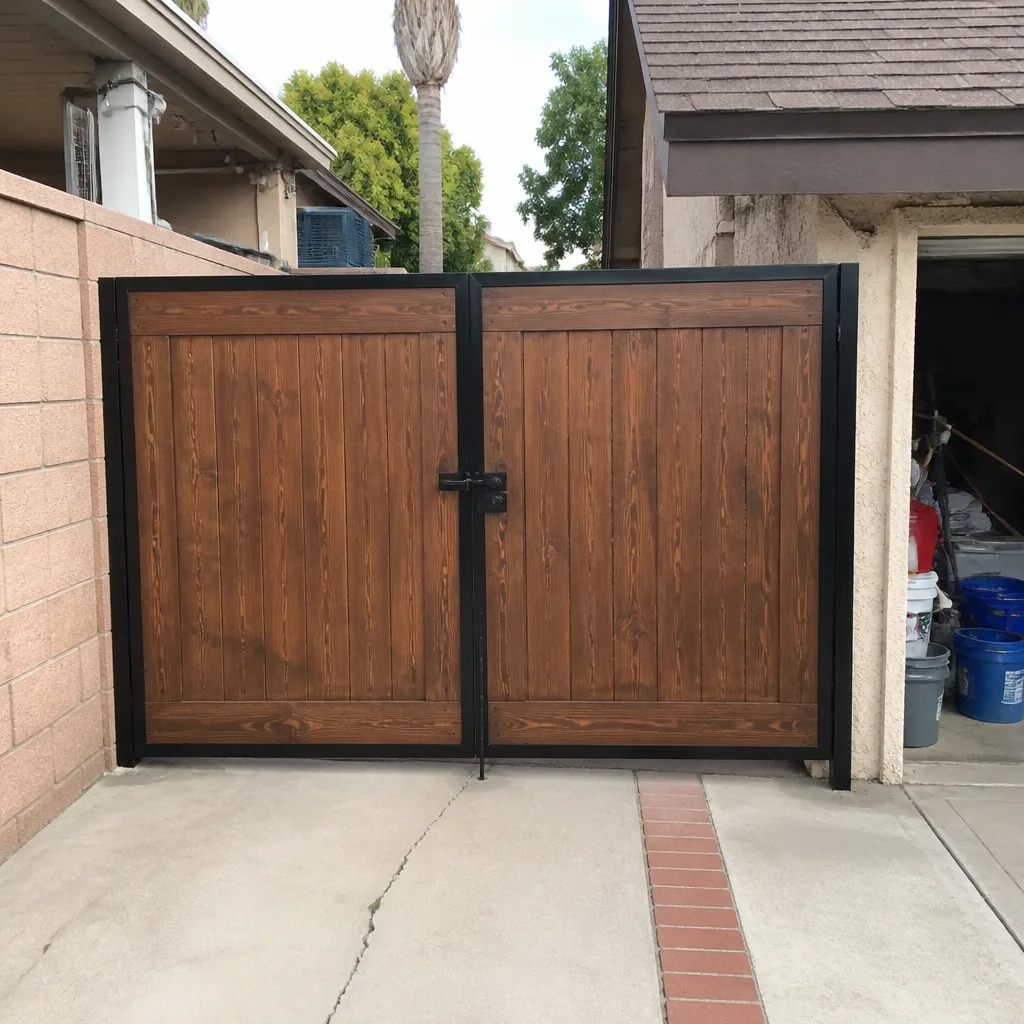
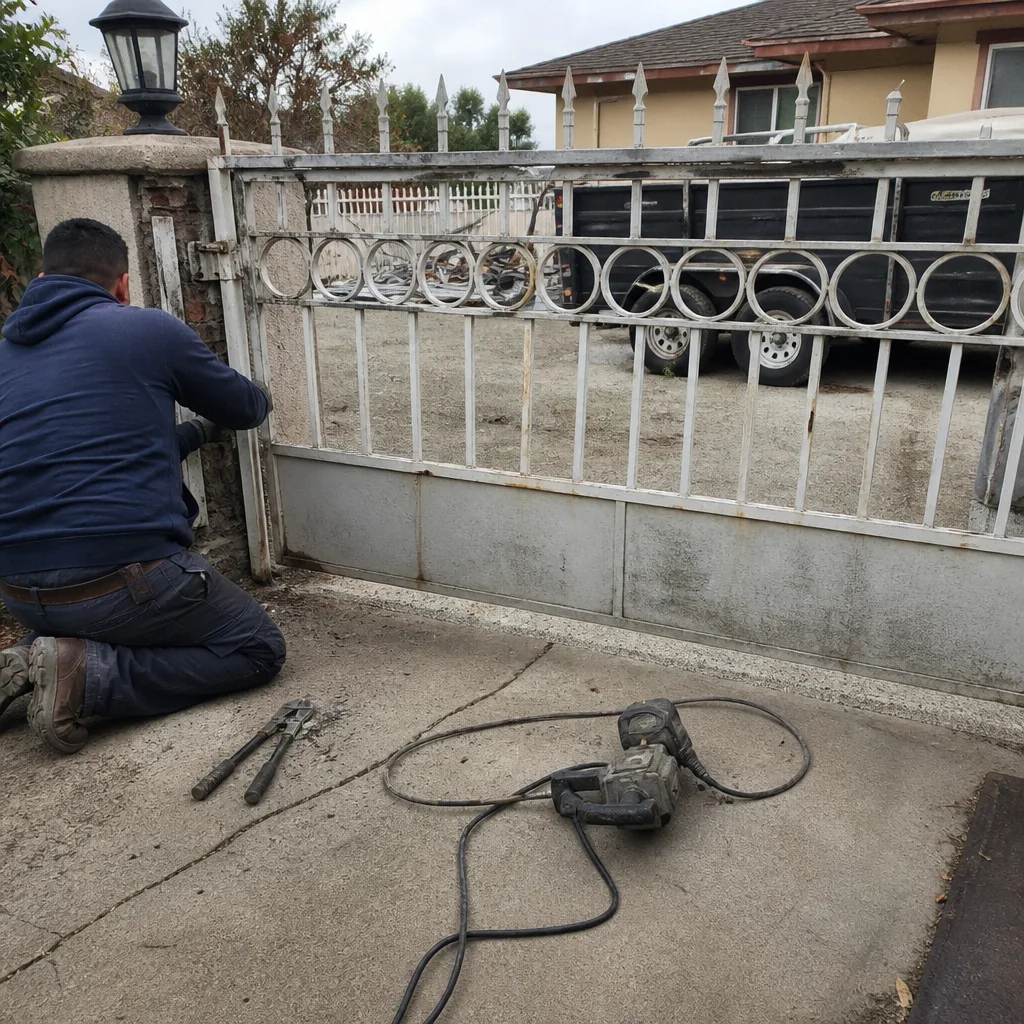
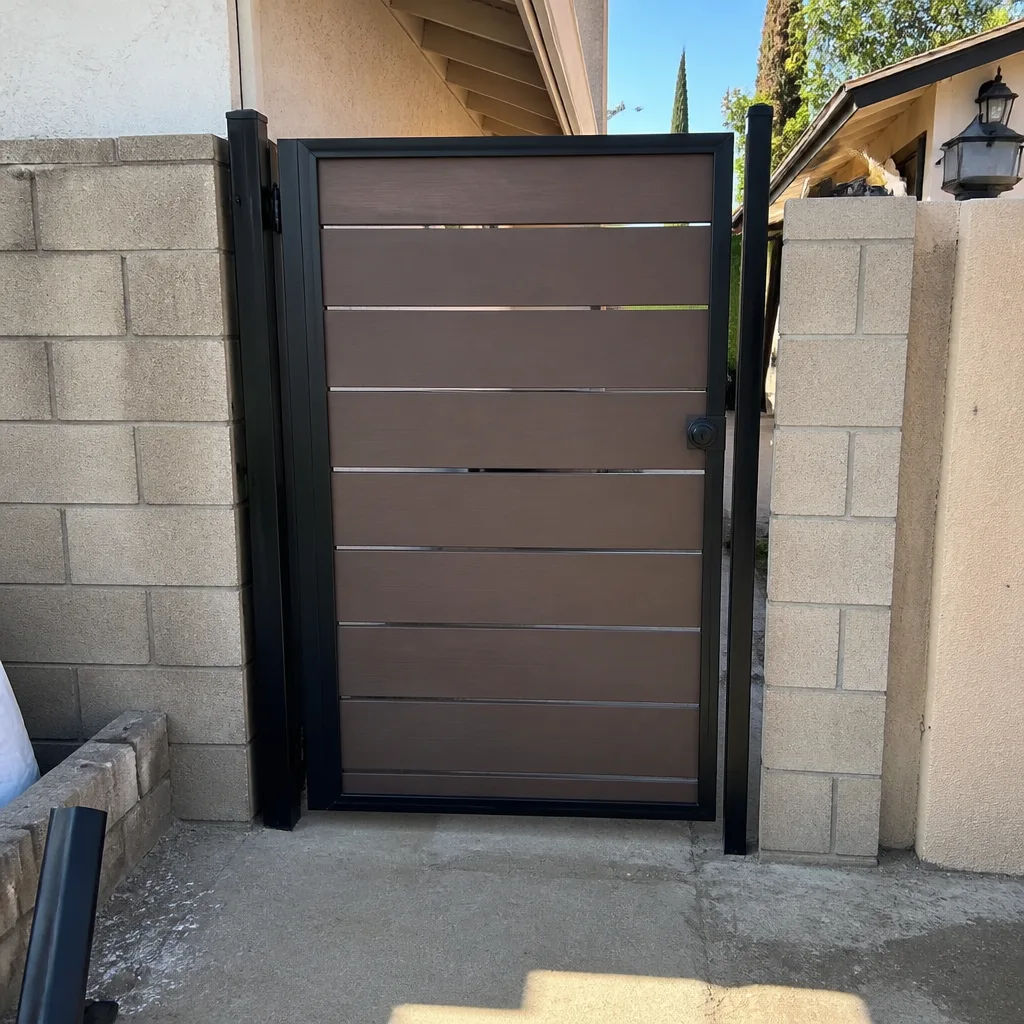
See the difference
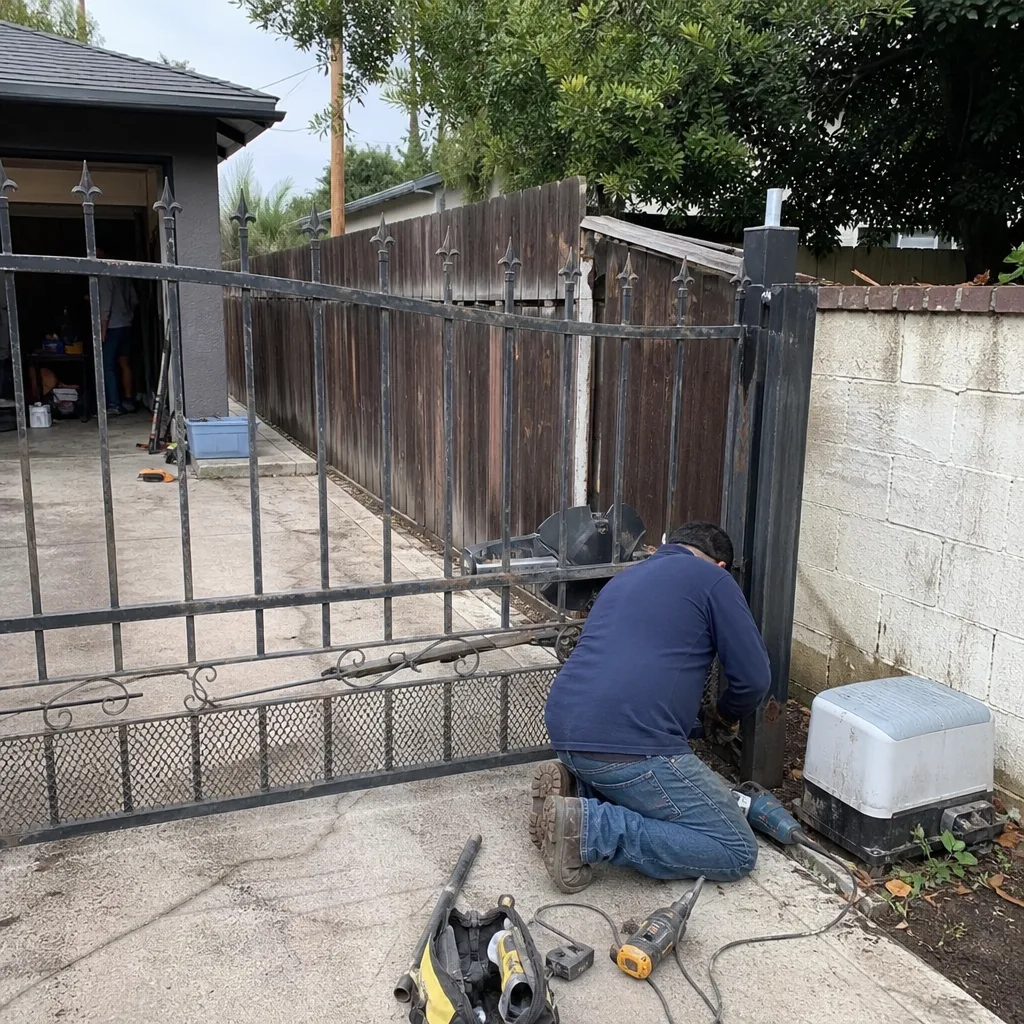 Before
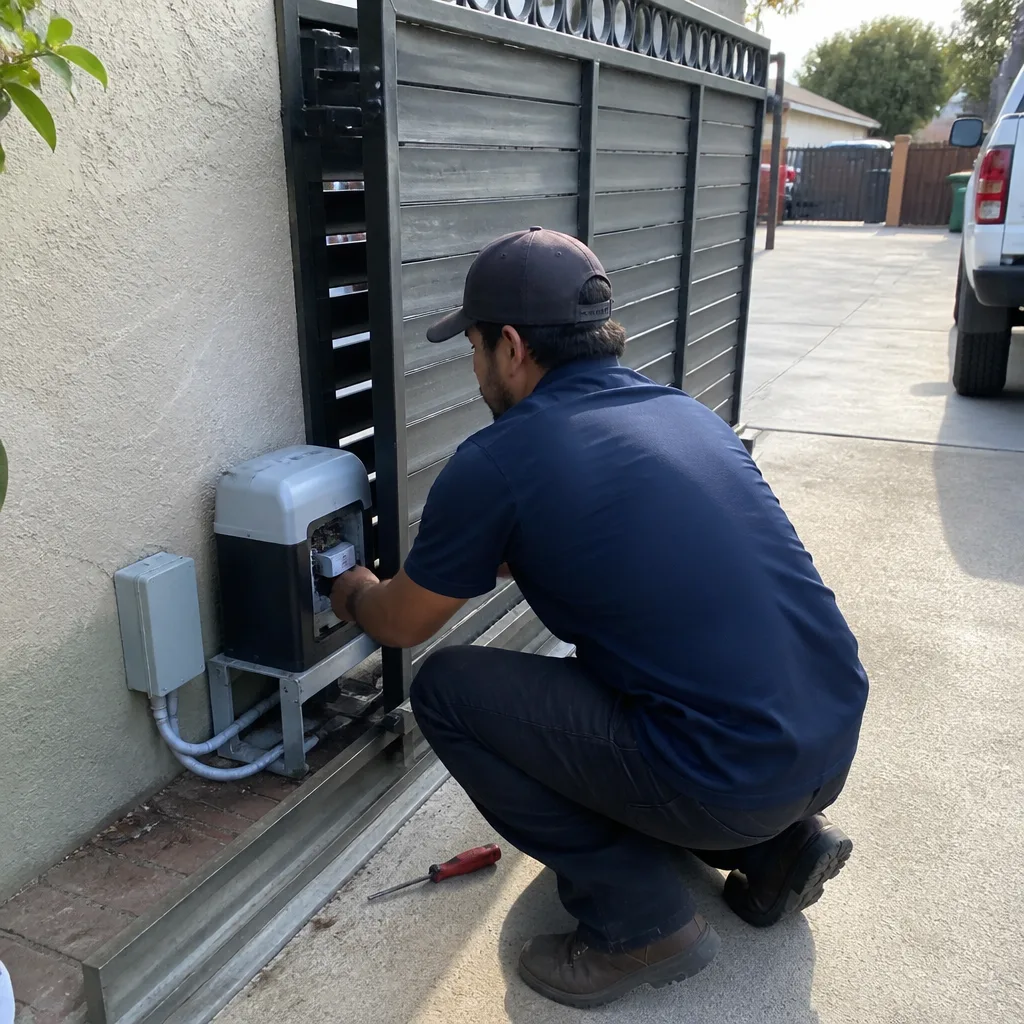 After
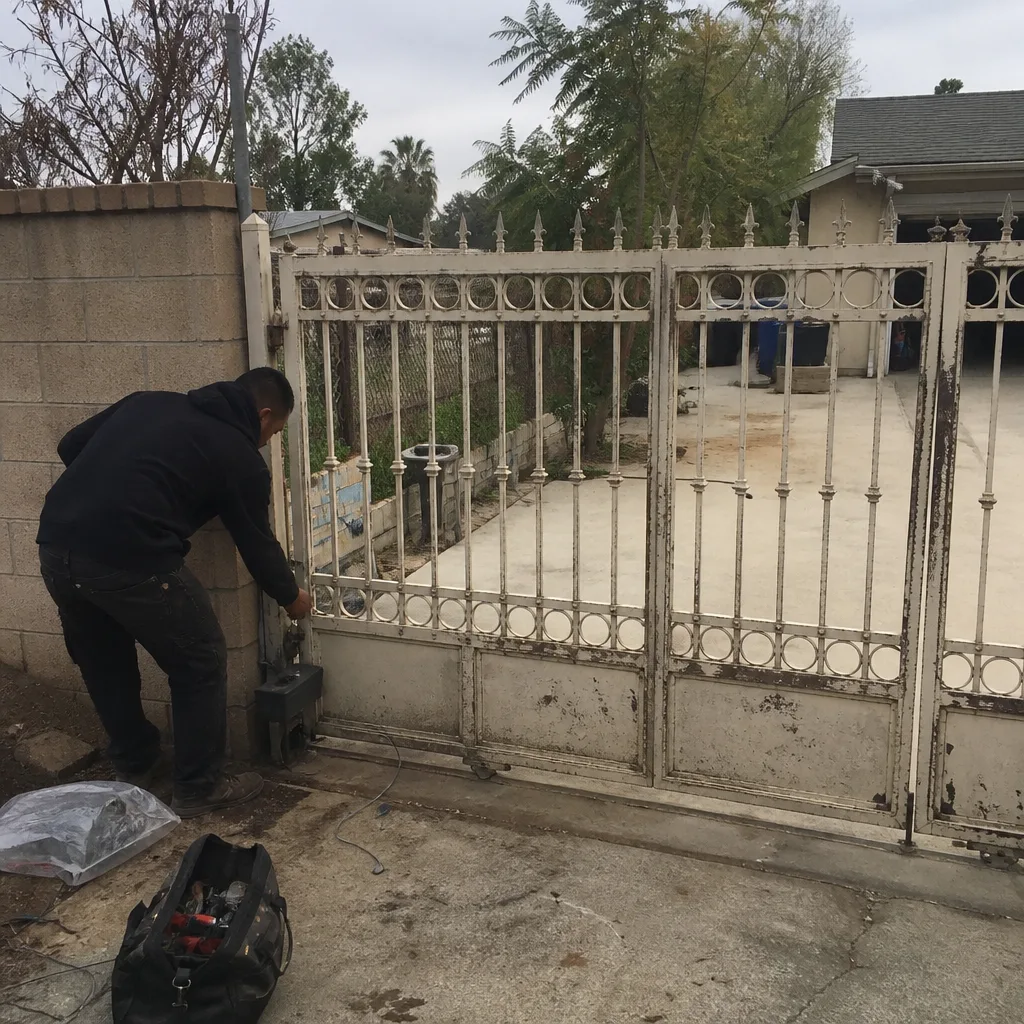 Before
 After
 Before
 After
Frequently Asked Questions
For most single-family homes in Upland, LiftMaster is the best all-around choice because of its combination of proven motor reliability, deepest parts availability in the Inland Empire, and the most mature accessory ecosystem for remotes, keypads, and smartphone control. That said, the right brand depends on gate weight, daily cycle count, and access control plans, which is why a professional evaluation matters. Call (833) 918-6938 to discuss your specific gate, and we’ll recommend the brand that fits your actual usage rather than a generic best-selling list.
A residential gate operator replacement in Upland typically ranges from $850 to $2,800 depending on the brand, the operator class, and whether the access control components are being replaced or reused. Entry-level residential kits like Mighty Mule sit at the low end, while LiftMaster and DoorKing systems with integrated entry hardware run higher. Falcon Gate Repair provides a written, quoted price before any work begins, so the number on the estimate is the number on the invoice, call (833) 918-6938 for a free replacement quote.
For gate repair calls in Upland, Falcon Gate Repair offers same-day and emergency response when a technician is available, and we prioritize calls where the gate is stuck open or stuck closed because that’s a security or access emergency. For installations and replacement evaluations, we typically schedule within the week to allow time for proper measurement and parts ordering. Call (833) 918-6938 and we’ll give you a straight answer on timing for your specific situation.
LiftMaster is generally the better residential choice for most Upland homes because its operators are sized for household cycle counts and its consumer accessory ecosystem, MyQ, keypads, remotes, is broader and easier to use. DoorKing becomes the better choice when the gate serves multiple households or a small commercial property, where its commercial-grade duty cycle and access control depth earn their higher price. We work on both brands daily and make the recommendation based on your cycle count and access patterns, call (833) 918-6938 for a recommendation specific to your property.
A full gate operator installation from Falcon Gate Repair includes removing the old operator, mounting the new one to your existing gate, wiring the motor and control board, installing and aligning the safety sensors and limit switches, programming all remotes and keypads, and testing the complete safety loop. If you’re adding entry hardware like a keypad or intercom, that’s included in the scope and priced upfront. Every installation includes a written quote before work starts and a final safety test before we leave the property.
Yes, Falcon Gate Repair handles the full electrical scope on gate installations, including the power run, conduit, control wiring, safety loops, and safety edges. Gate systems involve line voltage and must meet current safety standards for entrapment protection, which is part of every installation we perform. Call (833) 918-6938 for a free site evaluation and a written price that covers the complete installation, not just the motor mounting.
The Bottom Line
In Upland’s market, the best gate operator brand is rarely the one with the flashiest catalog. It’s the one with parts on a nearby shelf, a warranty that covers the components that actually fail, a duty cycle that matches your household’s real usage, and an access control path that grows with your needs. LiftMaster, DoorKing, Viking, and Eagle all earn their place in that conversation for different reasons, and the right answer depends on your gate, your household, and your plans. The framework in this guide exists to turn a confusing brand decision into a series of checkable facts. For more guides & resources on gate systems and maintenance, explore our blog. If you want that framework applied to your actual gate by a company that works on all of these brands every week, that’s what we do.
Written by the team at Falcon Gate Repair, serving Upland since 2018.