
Last updated November 2, 2026
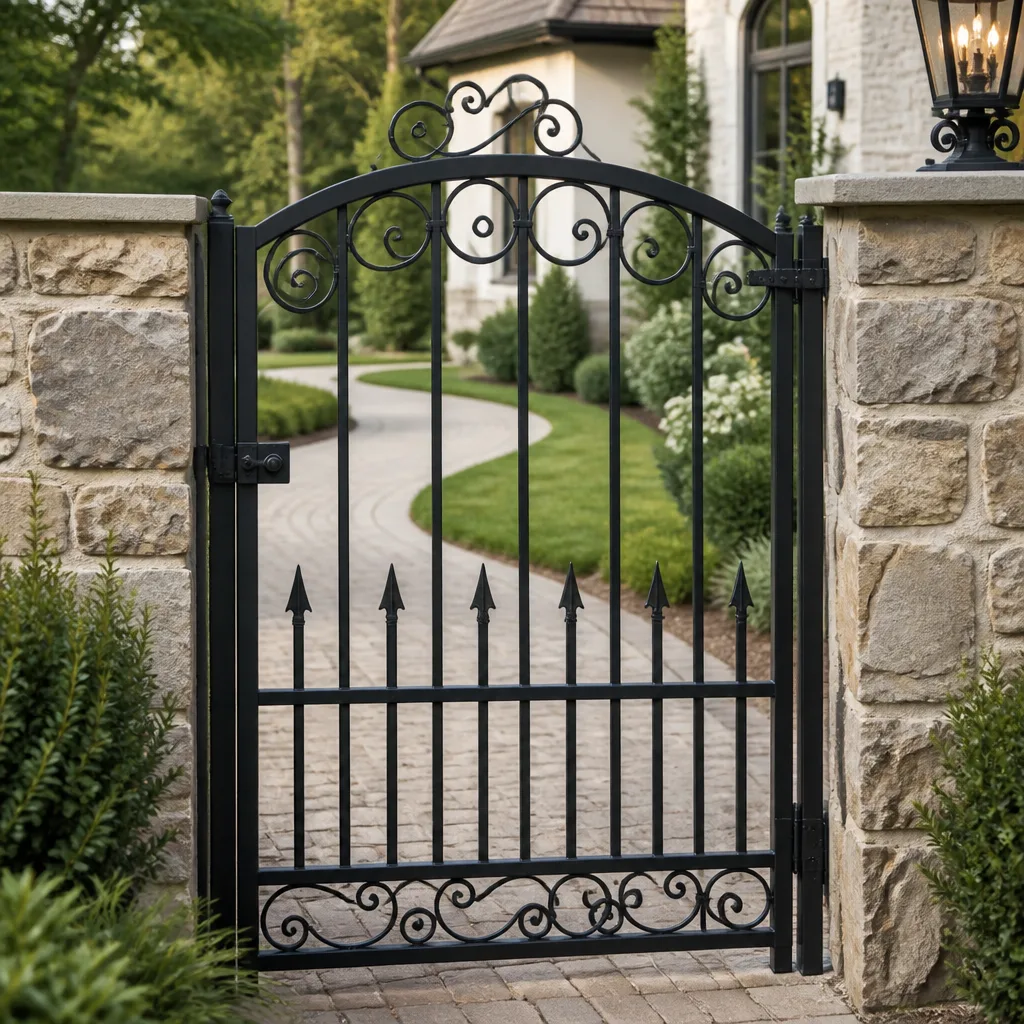 Wrought iron
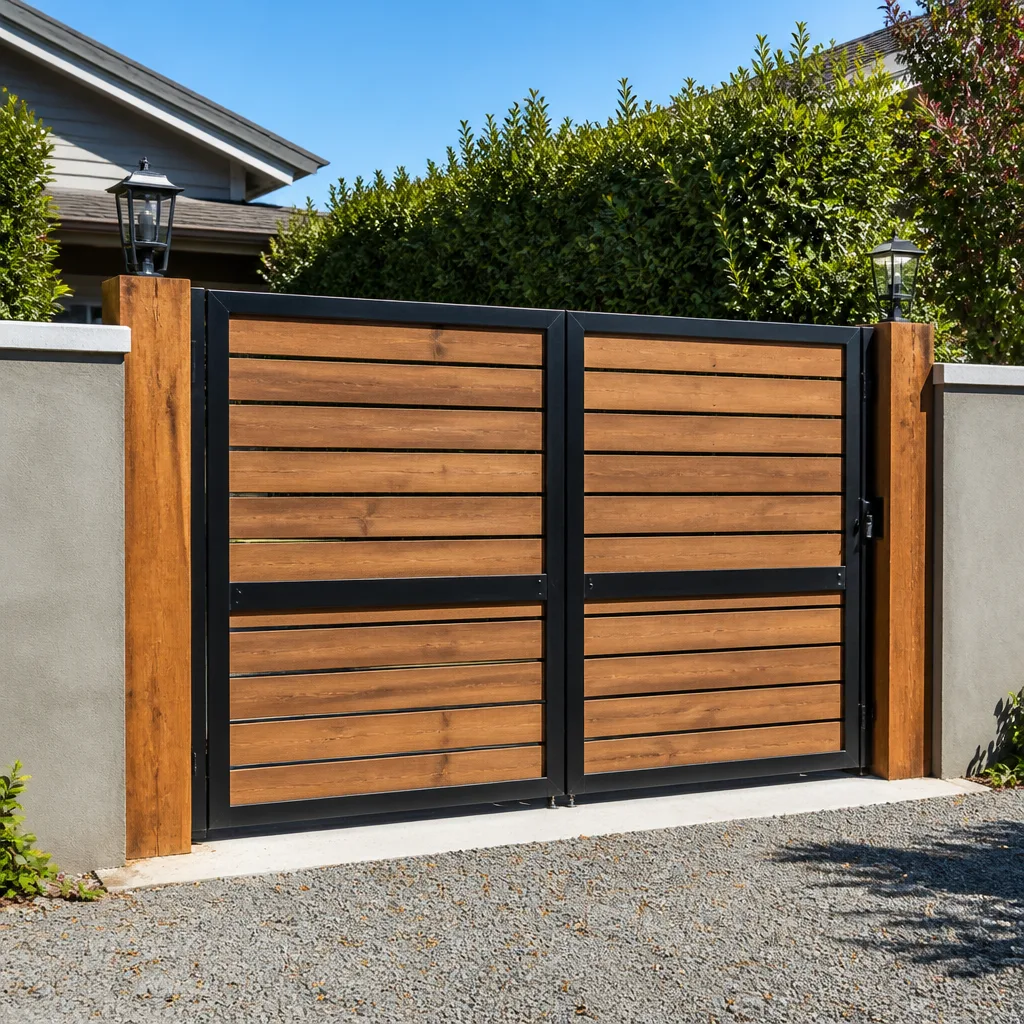 Wood & steel frame
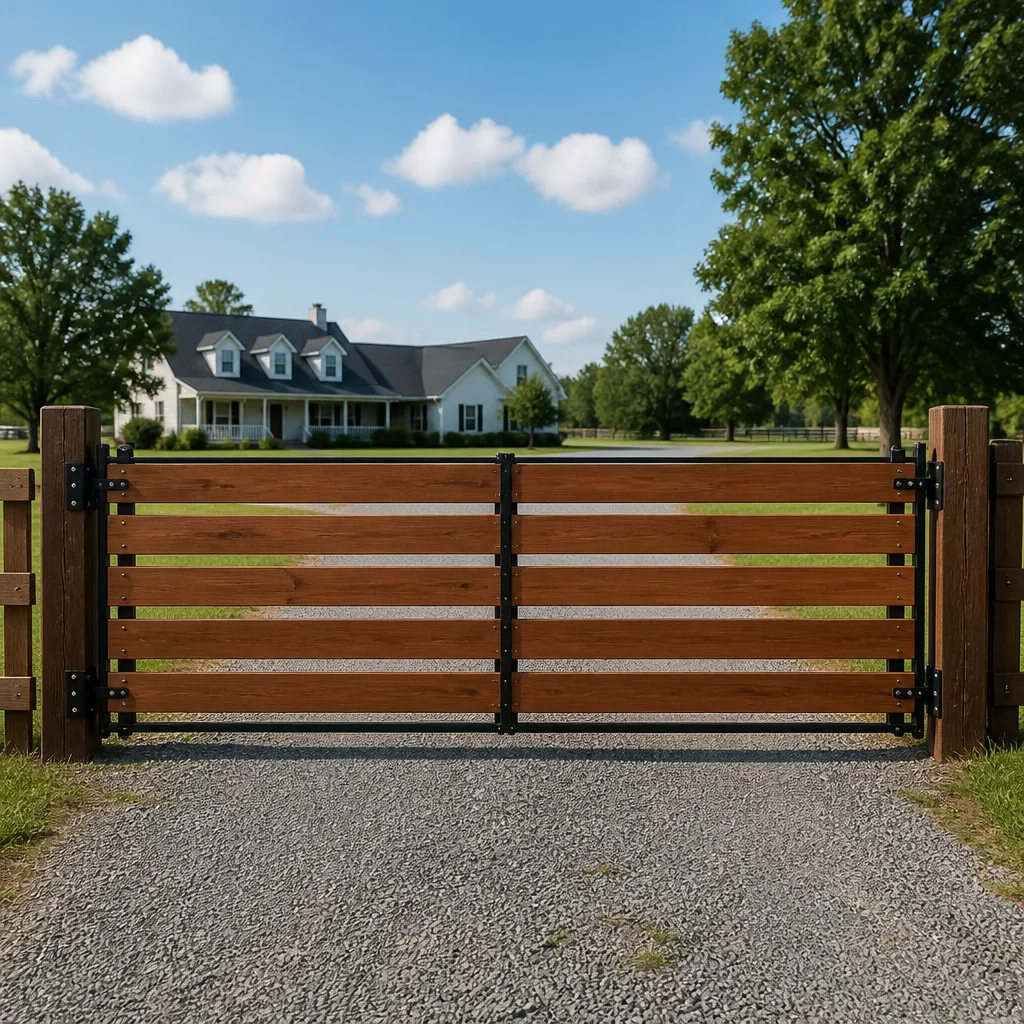 Farm & ranch
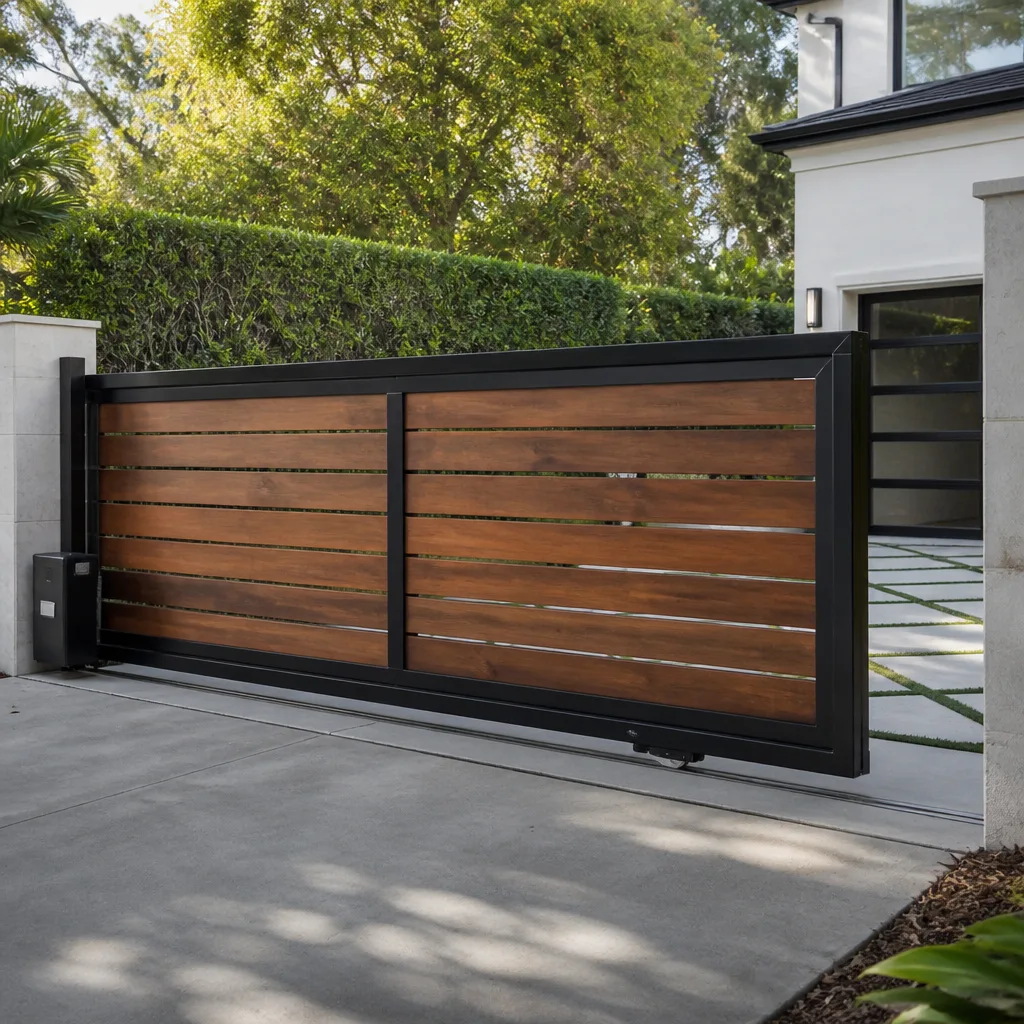 Sliding driveway gates
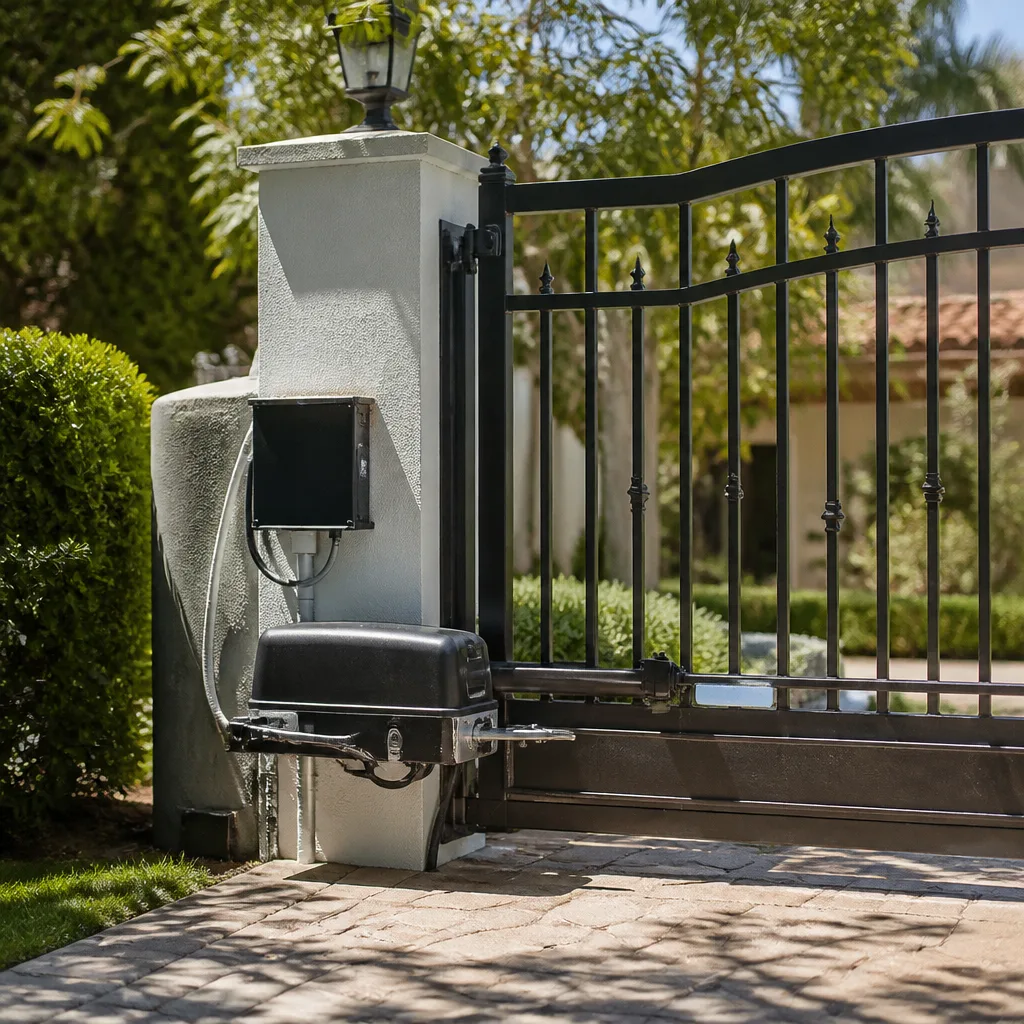 LiftMaster operators
Free on-site gate assessment - hinges, posts, and your LiftMaster or Nice gate operator checked before anything is quoted
The assessment is free and the quote is the invoice.
Get your free estimateDIY vs Professional Gate Repair: The Upland Homeowner’s Decision Guide
Most gate repair guides start by asking how handy you are. That’s the wrong question. The right question is which component failed, because the same operator that lets you safely swap a battery in ten minutes also contains a capacitor that can knock you across your driveway if you open the wrong housing. The gap between a safe DIY fix and a dangerous one isn’t measured in skill, it’s measured in voltage, spring tension, and entrapment logic. This guide gives Upland homeowners a component-by-component answer to the only question that matters: is this specific repair safe to touch, or does it need a Gate Repair technician who works on your brand every day?
Quick Answer
Some gate repairs are entirely safe for homeowners: replacing a battery, programming a remote, lubricating hinges, and clearing debris from the track. Others should never be attempted without a professional: anything involving the operator motor, capacitor, control board, safety sensor calibration, or high-tension mechanical parts. The deciding factor is whether the component carries electrical charge, entrapment-safety logic, or stored mechanical energy. For Upland homeowners, the practical line is simple: if you can see it, clean it, or press a button to fix it, it’s probably DIY. If you need a multimeter or a socket set to reach it, call Falcon Gate Repair at (833) 918-6938.
Styles & brands we work with
- Wrought iron
- Wood & steel frame
- Farm & ranch
- Sliding driveway gates
- LiftMaster operators
Table of Contents
- Gate Repairs That Are Genuinely Safe for Upland Homeowners
- Gate Repairs That Require a Professional, No Exceptions
- Why UL 325 Entrapment Protection Is Never a DIY Job
- The Hidden Cost of DIY on Automated Gate Systems
- Three Repairs Where DIY Saves Real Money with Zero Meaningful Risk
- How to Be a Smart DIY-Adjacent Homeowner: Prep Work That Cuts Technician Time
- Upland-Specific Factors That Change the DIY Calculus
Gate Repairs That Are Genuinely Safe for Upland Homeowners
Let’s start with the repairs you can absolutely handle yourself. These share three characteristics: no electrical exposure, no stored mechanical energy, and no calibration that affects safety logic. If you’re standing in front of your gate in Upland and the problem falls into one of these categories, grab a screwdriver and go.
Remote Control Programming and Reprogramming
If your remote stopped working after a power outage or you bought a replacement, programming it is a homeowner task on virtually every brand. LiftMaster, DoorKing, Elite, and Mighty Mule all design their residential remotes with a learn button or dip-switch process meant for the end user. The manual is usually available online, and the process takes under five minutes. The exception: if your remote won’t sync after three attempts, the problem is likely in the receiver board, not the remote, and that’s a technician-level diagnosis.
Gate Battery Replacement
Most residential swing and slide gate operators run on 12V batteries, especially in California where solar-powered gates are common. If your gate moves slowly, beeps when opening, or loses position memory after a power outage, the battery is usually the culprit. Replacing it is genuinely simple: disconnect the old battery, connect the new one at the same terminals, and run one full open-close cycle. Wear gloves, don’t touch the terminals to each other, and you’re done in fifteen minutes. Where Upland homeowners get into trouble is buying the wrong battery type, so check your operator model number before ordering.
Lubrication and Basic Cleaning
A gate that screeches or sticks is often just dry. Applying a silicone-based lubricant to hinge points, rollers, and the chain or screw drive on your operator is a safe quarterly maintenance task. Youshould also clear leaves, dirt, and debris from the track, especially after the Santa Ana winds blow through Upland and pile everything against your gate line. Use a stiff brush, clear the full track length, and test the gate cycle. If it’s still grinding after cleaning, that’s metal-on-metal wear, not debris, and you need a technician to inspect the rollers and hinges before they fail completely.
Gate Repairs That Require a Professional, No Exceptions
Here’s the binary list you came for. These are not gray areas, not “if you’re experienced” tasks, and not projects to attempt with a YouTube tutorial open. These involve electrical current, stored spring or cable tension, or entrapment-safety calibration that can kill someone if set wrong.
- Any work on the operator motor or capacitor. Capacitors store charge even when the unit is unplugged. A discharged capacitor can deliver a painful or dangerous shock, and an improperly wired motor burns out in days, not years.
- Control board diagnosis or replacement. The control board is the brain of your gate. Swapping one without knowing the exact board revision for your brand, and whether it needs programming, turns a $400 board replacement into a $900 repair when the new board fries on first power-up.
- Safety sensor alignment or force setting adjustment. This is the UL 325 entrapment protection we’ll cover in detail below. Getting this wrong doesn’t just break the gate. It can trap a child or pet.
- Spring and cable work on cantilever or slide gates. These systems hold thousands of pounds of tension. A cable that snaps under load moves fast enough to cause serious injury.
- Any work involving the power supply wiring between the operator and the panel. This is line voltage, it’s regulated by the state of California, and a loose connection in a buried conduit is a fire risk as well as a gate failure.
- Vehicle detection loop repair or replacement. These loops are cut into the driveway, wired to the control board, and tuned to the specific frequency of your operator. Getting the wire gauge or loop depth wrong means the gate never opens for a car again until a professional re-cuts the driveway.
What all of these have in common is that the cost of the repair is a fraction of the cost of getting it wrong. If you’re not sure which category your problem falls into, call us at (833) 918-6938 and describe what you’re seeing. We’ll tell you honestly whether it’s safe to touch or whether you need a technician.
Why UL 325 Entrapment Protection Is Never a DIY Job
UL 325 is the federal safety standard that governs automatic gate operators. It exists because automatic gates have killed people, most of them children. The standard mandates that every automated gate detect an obstruction and reverse before causing injury, using either an inherent entrapment system built into the operator or external sensors like photo eyes and contact edges. Here’s what most homeowners in Upland don’t realize: the force setting on your operator determines how much pressure the gate applies before reversing, and that setting is calibrated to work with your specific gate’s weight, length, and travel speed.
When you change the force setting on a DoorKing or LiftMaster operator without recalibrating the entrapment protection, you’re not making an adjustment. You’re disabling a safety system. A gate that reverse-stops too forcefully can pin a child against the fence post before the motor registers resistance. A contact edge that’s been disconnected because it kept causing false reverses means the gate will close on whatever is in the gap, including a person. In our experience, this is the most common reason an Upland homeowner ends up with a repair bill that includes an urgent safety recalibration after a well-meaning neighbor “adjusted the gate to close faster.”
The liability angle matters too. If you adjust a safety component on your gate and someone is injured, your homeowners insurance may not cover you. The standard asks a simple question: was the gate system maintained by someone qualified to set entrapment protection? If the answer is no, the claim gets complicated. This isn’t about being handy. It’s about a calibrated safety system that has no margin for error.
The Hidden Cost of DIY on Automated Gate Systems
The headline cost of professional gate repair in Upland is usually $85 to $145 for the service call plus parts, with most repairs landing between $200 and $600 depending on the component. For a detailed look at what drives these numbers, see our Gate Repair Cost Breakdown: The Upland Homeowner’s Reference for 2026. Homeowners who go the DIY route often think they’re saving that amount. What they don’t see is the second invoice.
Voided Operator Warranties
Every major gate operator manufacturer writes warranty language that excludes damage caused by unauthorized repair or modification. LiftMaster, DoorKing, Elite, and Mighty Mule all have similar clauses. Open a sealed operator housing to replace a capacitor you diagnosed yourself, and the warranty on that unit is gone even if your repair works perfectly. If the unit fails six months later for an unrelated reason, the manufacturer will ask for service records, see the broken seal, and deny the claim. The operator you were trying to save is now a full-cost replacement.
Misdiagnosis That Damages Secondary Components
A gate that opens but won’t close is a classic diagnostic trap. The homeowner guesses it’s the close limit switch, replaces it, and the gate still misbehaves. The real problem was a failing capacitor that only delivers enough power on the open cycle. Now the gate has a new limit switch, a still-failing capacitor, and a control board that overheated because the capacitor’s declining output made the board work harder. The $50 DIY part became a $700 professional repair on three components. This is what happens when you’re not working from brand-specific diagnostic logic.
The Partially-Disassembled System Premium
This one is real and it costs Upland homeowners every week. A technician arrives to find the operator housing open, three wires disconnected, and the homeowner’s notes about what they tried. Now the technician has to reverse-engineer what was removed, verify every connection against the brand’s wiring diagram, and test for damage done by the attempted repair. That’s not a forty-minute repair anymore. That’s a two-hour diagnostic at service-call rates, and the bill is higher than it would have been if the gate had just been left alone. We don’t charge a penalty for this, but the time is real and the clock runs the same way. When a tech inherits a half-finished job, the customer pays for the forensic work to undo it.
Three Repairs Where DIY Saves Real Money with Zero Meaningful Risk
Not every DIY gate project is a trap. These three repairs are genuinely homeowner-safe, they save real money, and they don’t touch anything with voltage, tension, or safety calibration.
1. Gate Battery Replacement: $40 to $90 Saved
Replacing a 12V gate battery yourself costs between $40 and $90 for the battery, depending on brand and capacity. A professional replacement runs $150 to $250 once you factor in the service call and labor. The task is genuinely simple: disconnect two terminals, swap the battery, reconnect. The only skill involved is reading the old battery’s model number before ordering. Safe, fast, and it extends the life of your operator.
2. Remote Programming and Reprogramming: $75 to $120 Saved
A service call to program a Mighty Mule or LiftMaster remote costs $75 to $120 in Upland. Doing it yourself takes five minutes with the operator’s manual. You press the learn button on the operator, press the button on the remote, and test. That’s it. There’s no electrical exposure, no calibration risk, and no way to damage the system by trying.
3. Cosmetic Touch-Up and Minor Surface Repair: $100 to $300 Saved
Rust spots, chipped paint, and surface corrosion on iron or steel gates don’t affect function. Treating these yourself with a wire brush, rust converter, and a rattle can of enamel costs under $40 and saves a $100 to $300 professional repaint or panel replacement. The key is catching rust early, especially in Upland where the dry heat keeps gates from rusting badly but the occasional rain plus morning dew will work into any bare metal. If the rust has already pitted the metal or you see daylight through a hole, stop and call us. That’s structural, not cosmetic.
How to Be a Smart DIY-Adjacent Homeowner: Prep Work That Cuts Technician Time
Here’s the move that savvy Upland homeowners make. They don’t attempt the repair themselves, but they do everything around the repair that reduces billable technician time. This is how you get a professional result at a lower cost without touching anything dangerous.
- Document error codes before calling. Most modern operators, including DoorKing and Elite, display error codes as blinking lights or a small LCD readout. Before you call, watch the gate fail, note exactly what the display shows, and write down the sequence. When you call us at (833) 918-6938, that code lets us bring the right part on the first trip instead of diagnosing on-site.
- Clear the track and the surrounding area. Remove leaves, dirt, toys, and debris from the full gate travel path and the operator area. This is safe to do, it gives the technician clean access, and it means we’re not spending billable time on work you could do yourself.
- Test the manual release and note what changes. Every automated gate has a manual release lever. Pulling it disconnects the operator so the gate can be pushed by hand. If the gate moves smoothly by hand, the problem is in the operator or electronics. If it’s still stiff, the problem is mechanical. That single test cuts twenty minutes of diagnostic time off a service call.
- Take photos of the operator housing, the brand label, and the model number before calling. The model number is usually on a sticker inside the operator cover or on the side of the housing. A clear photo means we know your exact system before we arrive.
- List when the problem started and what happened right before it. Power outage, storm, car bumping the gate, recent landscaping work that may have cut a wire, a new remote that was programmed. The sequence of events often points directly at the component that failed, and that’s free diagnostic information.
This prep work is the sweet spot of the DIY-versus-pro decision. You’re not risking your safety or your operator’s warranty, but you’re not paying for time you can provide yourself either. It’s how informed homeowners in Upland get the bill down without touching a single live wire.
Upland-Specific Factors That Change the DIY Calculus
Upland’s climate and building stock create some gate repair patterns that are different from coastal California or the desert valley. Understanding these helps you know when DIY is more or less likely to work.
Santa Ana wind damage is a spring and fall constant. When the winds blow through Upland from the northeast, they load side pressure onto swing gates and drive debris into slide gate tracks. A gate that worked fine yesterday and won’t open today after a wind event is usually a mechanical obstruction or a shifted limit switch, not an electronics failure. Clearing debris is safe DIY. Realigning a gate that’s been pushed off its travel path is not, because the fix usually involves resetting the limit switches and sometimes repositioning the gate on its hinges. For help preparing for these seasonal events, check our Gate Repair Emergency Preparedness Guide for Upland Homes.
Upland’s hard, dry soil settles and shifts. Gate posts set in Upland’s compacted clay and rocky soil can shift over the dry season as the ground contracts. A gate that drags on the ground at the latch end in August probably has a post that’s moved a half-inch. Shimming the hinges is a temporary fix you can do yourself, but the real repair is re-setting the post or adjusting the gate’s hang, which needs professional tools and sometimes concrete work.
Solar-powered gates are common, and they have their own failure profile. Many Upland homeowners run gates on solar panels feeding a battery bank. These systems fail differently than hardwired operators: the battery degrades, the panel gets dusty, or the charge controller gives out. Battery replacement is safe DIY. Charge controller or panel diagnosis is not, because you’re working with live DC current at the same time you’re trying to figure out which component in the chain actually failed.
Homeowners associations in Upland often have gate maintenance clauses. If you’re in an HOA community, check your CC&Rs before attempting any gate repair. Some HOAs own the gate system outright and are responsible for maintenance. Others require that repairs be done by a licensed contractor. Attempting DIY on an HOA-owned gate can put you in violation of your HOA agreement and create liability for damages. When in doubt, call the HOA management office first, then call us.
Common Mistakes to Avoid
- Adjusting the force setting to fix a gate that reverses for no reason. The gate reverses because the safety system detected an obstruction or because the force setting is already too high and the current draw is triggering the thermal overload. Raising the force makes the gate ignore the real problem and increases entrapment risk.
- Replacing a gate battery with a generic battery that doesn’t match the operator’s voltage and capacity. An under-sized battery runs the operator at reduced voltage, which makes the motor work harder, which shortens the motor’s life. Match the battery spec to the operator model.
- Opening the sealed operator housing to “take a look.” The seal exists to keep dust and moisture out of a component that’s sensitive to both. Breaking the seal voids the warranty and lets Upland’s invasive dust into the electronics compartment.
- Buying a replacement control board based on brand alone without checking the board revision. DoorKing and LiftMaster both issue multiple board revisions with different wiring layouts and programming requirements. The wrong board either doesn’t work or damages the operator on power-up.
- Lubricating the gate track with WD-40. WD-40 is a solvent, not a lubricant. It attracts dust, and on an Upland gate track that sees daily dust and occasional wind-blown grit, a WD-40-treated track becomes a sticky grinding surface within weeks.
- Attempting to tighten a sagging gate by cranking on the hinge bolts. A sagging gate is usually a post alignment problem or a worn hinge bushing, not a loose bolt. Cranking the bolts distorts the hinge plates and makes the real repair more expensive.
- Calling a garage door company for a gate repair. Gates and garage doors share some concepts but almost none of the parts. A garage door tech may have never touched a FAAC board or a Viking operator. For gate-specific work, you want a gate-specific company. Our Falcon Gate Repair home page explains the difference in more depth.
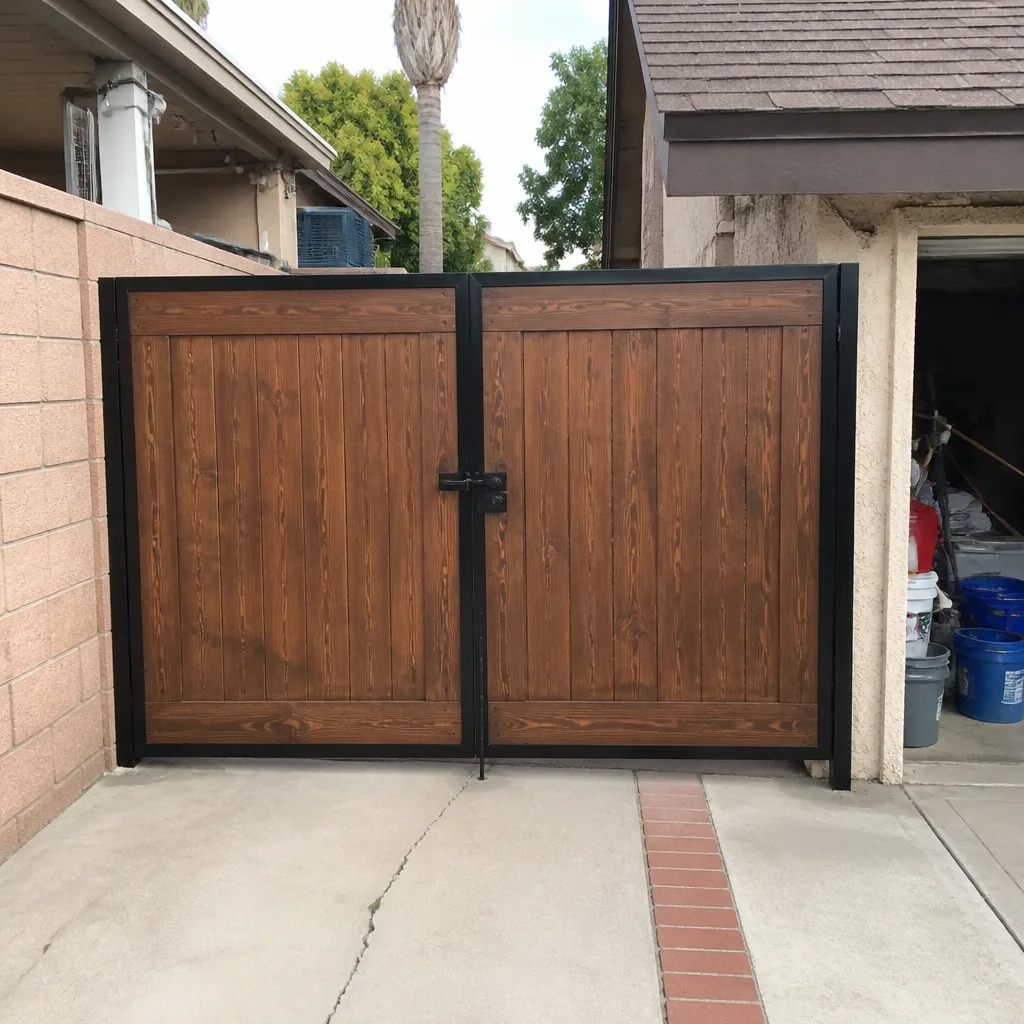
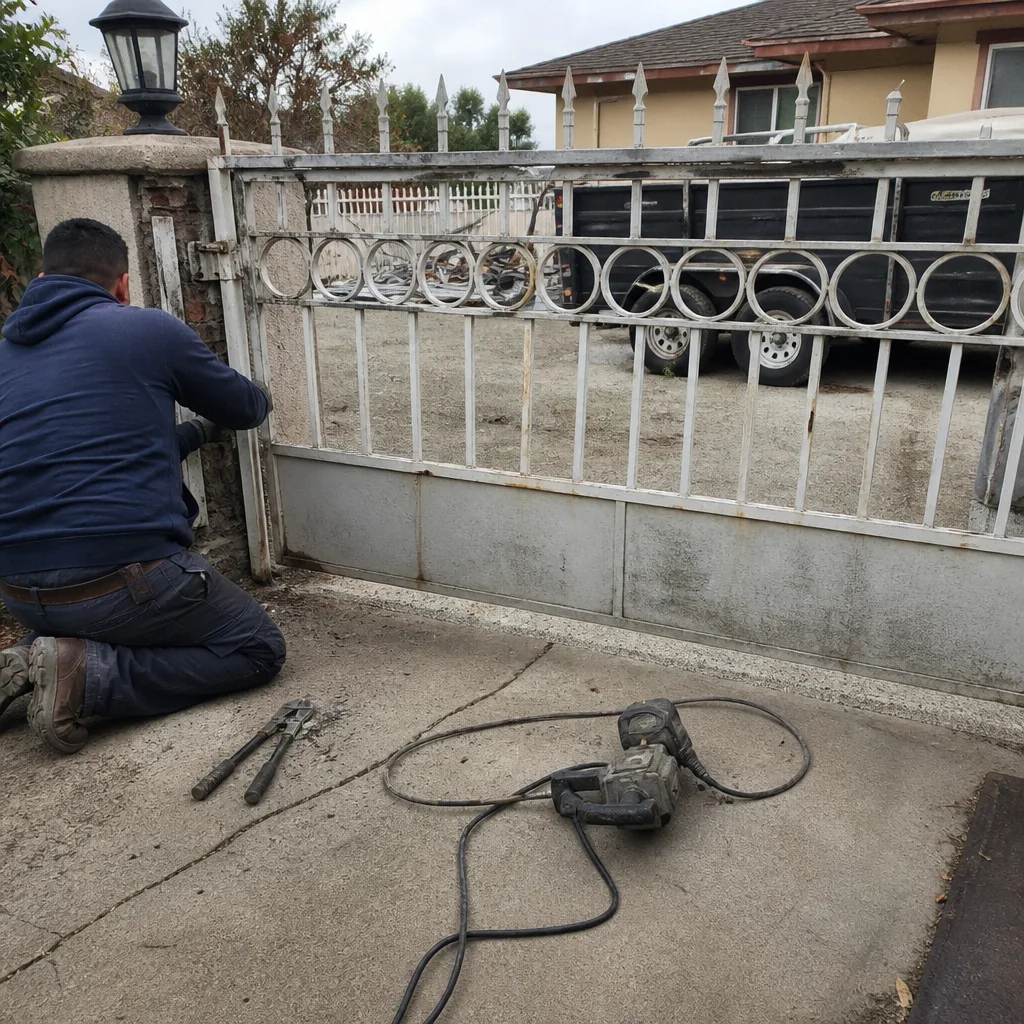
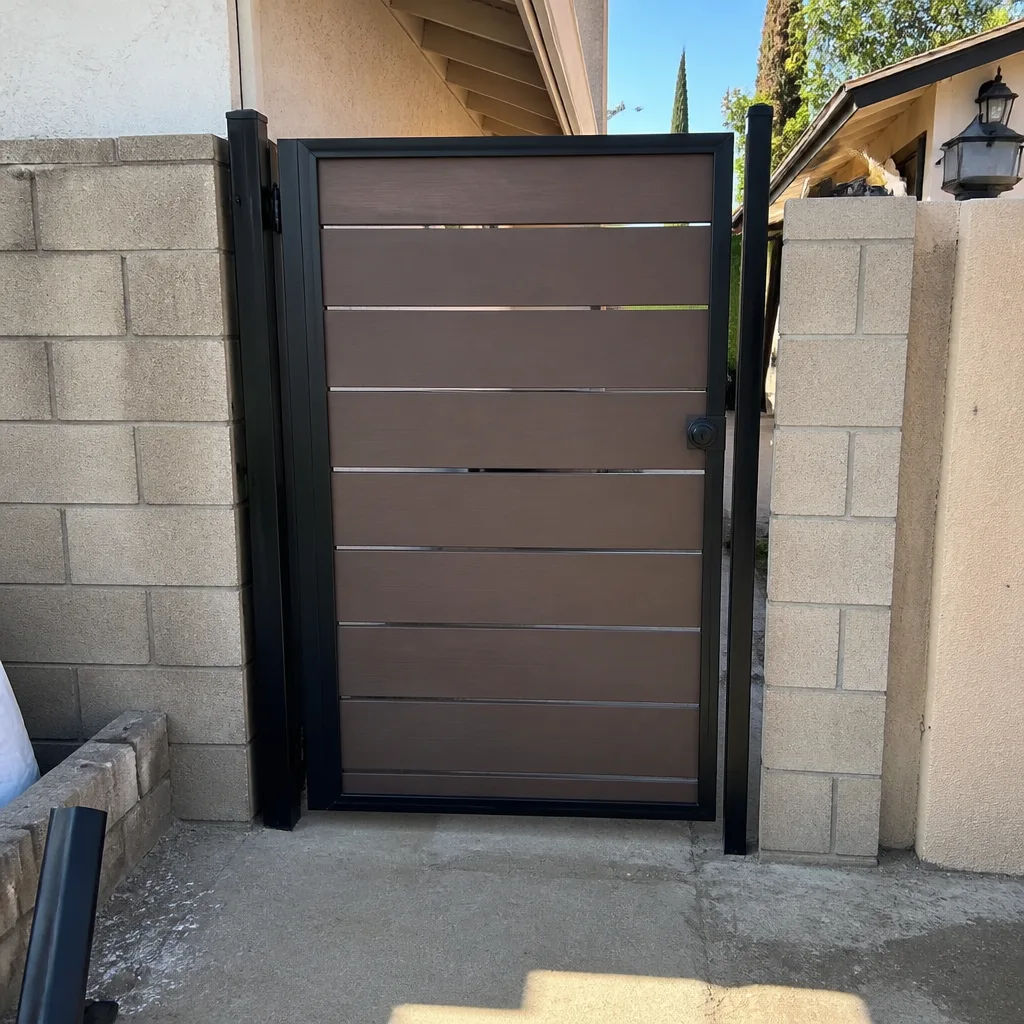
See the difference
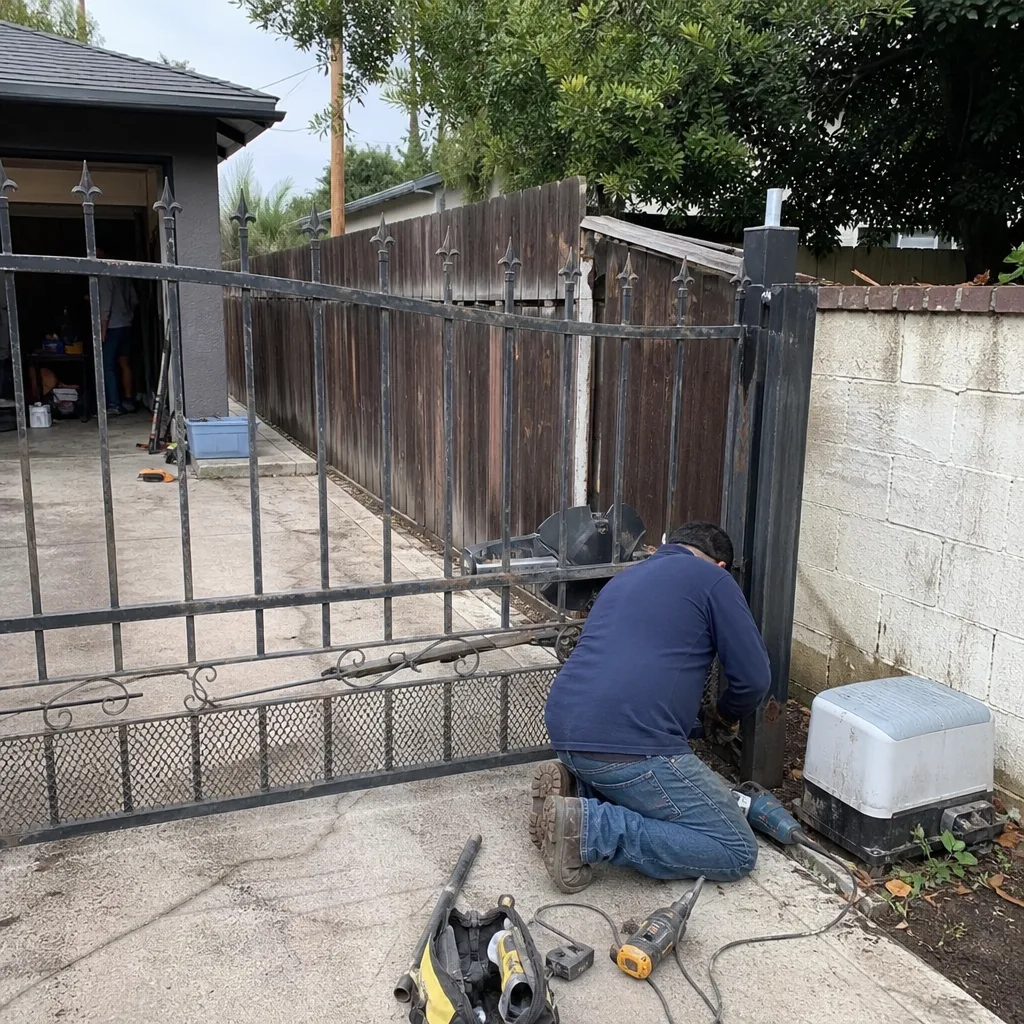 Before
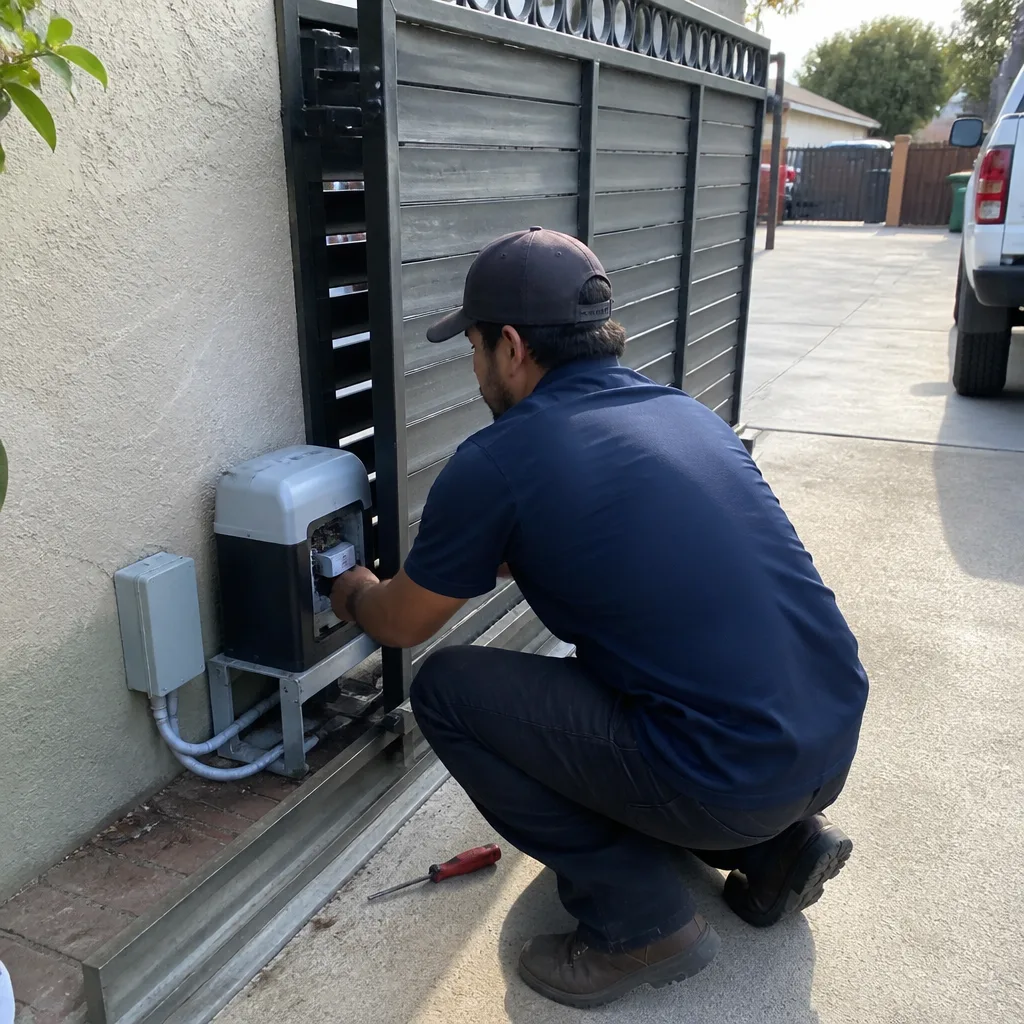 After
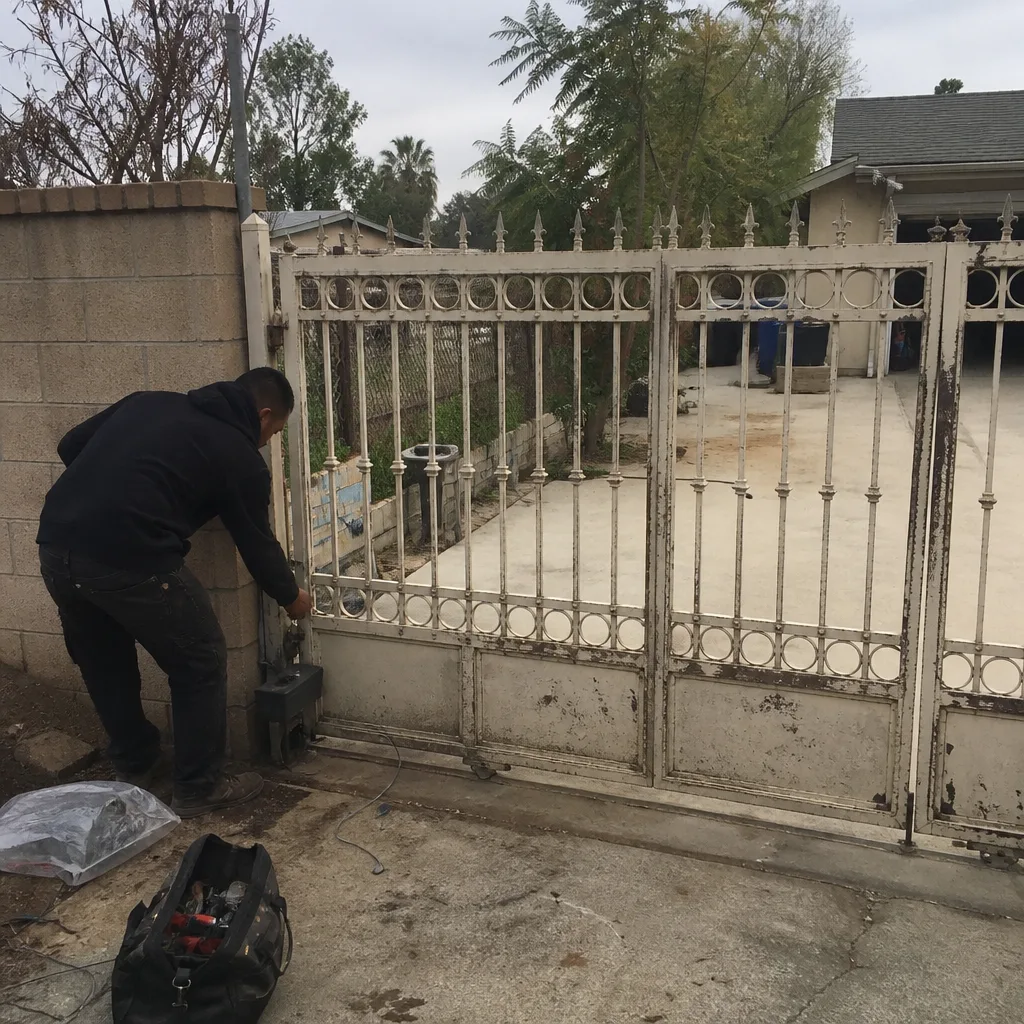 Before
 After
 Before
 After
When to Call a Professional
Call a gate professional when the repair involves any component that carries electrical charge, stores mechanical tension, or calibrates to a safety standard. That means motors, capacitors, control boards, safety edges, photo eyes, vehicle loops, springs, cables, and force settings. It also means when you’ve already attempted a safe DIY fix and the gate still misbehaves, because repeated failure points to a deeper problem that needs brand-level diagnostic knowledge. Falcon Gate Repair offers free estimates in Upland, and our technicians arrive with working knowledge of LiftMaster, DoorKing, Elite, and Mighty Mule systems, plus five other major brands. For more guides & resources, visit our blog. If your gate is part of your daily security and access, you don’t want a generalist guessing. You want someone who knows your operator’s logic before they open the housing.
For gate repair in Upland, we diagnose by brand, not by trial and error. That’s the difference a specialist makes.
Frequently Asked Questions
Most gate repairs in Upland cost between $200 and $600 including the service call and parts, with simple fixes like remote programming or battery replacement running under $250 and control board replacements or motor work landing in the $400 to $600 range depending on the brand. The exact quote depends on which component failed and what parts your operator requires. Call (833) 918-6938 for a free estimate with your specific model number, and you’ll get a direct answer without any obligation.
You can safely replace your gate battery, program your remote, lubricate hinges and track, and clear debris from the gate path without professional help. You should not attempt any repair involving the motor, capacitor, control board, safety sensors, springs, cables, or power wiring, because these components carry electrical charge or stored mechanical tension and are covered by UL 325 safety standards that require calibrated adjustment. When in doubt, call (833) 918-6938 and describe the symptom, we’ll tell you if it’s a safe DIY fix.
Safe homeowner repairs are remote programming, battery replacement, lubrication and track cleaning, tightening visible hardware like bracket bolts where no electrical or safety calibration is involved, and cosmetic touch-up of surface rust. Anything beyond these basics starts to carry electrical or entrapment risk, and that’s the line where you should bring in an electric gate repair in Upland specialist.
Yes, in most cases. LiftMaster, DoorKing, Elite, and Mighty Mule all exclude coverage for damage caused by unauthorized repair or modification, and breaking the seal on the operator housing is usually enough to void the warranty even if your repair works. The only safe DIY tasks that won’t affect your warranty are battery replacement, remote programming, and external maintenance like lubrication and cleaning.
The operator capacitor is the most immediately dangerous component because it holds a charge even after the unit is unplugged, and the entrapment protection system is the most dangerous in terms of long-term risk because an incorrect force or sensor setting can trap and injure a person. Both of these should only be handled by a qualified gate technician who works with your specific operator brand.
Repairs to an existing gate typically don’t require a permit in Upland, but a full gate installation in Upland may require one depending on the gate’s height, the setback from the property line, and any electrical work involved. If you’re replacing a gate or adding automation to a manual gate, a licensed electrician or contractor may be needed for the power run. Our team can advise you on what your specific project requires during the estimate.
The Bottom Line
The DIY-versus-professional gate repair decision comes down to one question: does the component you’re about to touch carry voltage, store mechanical tension, or calibrate to a federal safety standard? If yes, the savings from DIY are an illusion, because the cost of getting it wrong, in voided warranties, damaged components, or a gate that can trap a child, is higher than the repair bill you’re trying to avoid. If the job is a battery, a remote, or a cleaning brush, go ahead. You’ll save money and you won’t risk anything. For everything else in Upland, a gate-specific technician who knows your brand’s logic is the cheaper option in the long run, and often the cheaper option on the same day. Call (833) 918-6938 and we’ll tell you straight, before you spend a dollar, whether your gate is a weekend project or a phone call.
Written by the team at Falcon Gate Repair, serving Upland since 2018.