
Last updated November 2, 2026
 Wrought iron
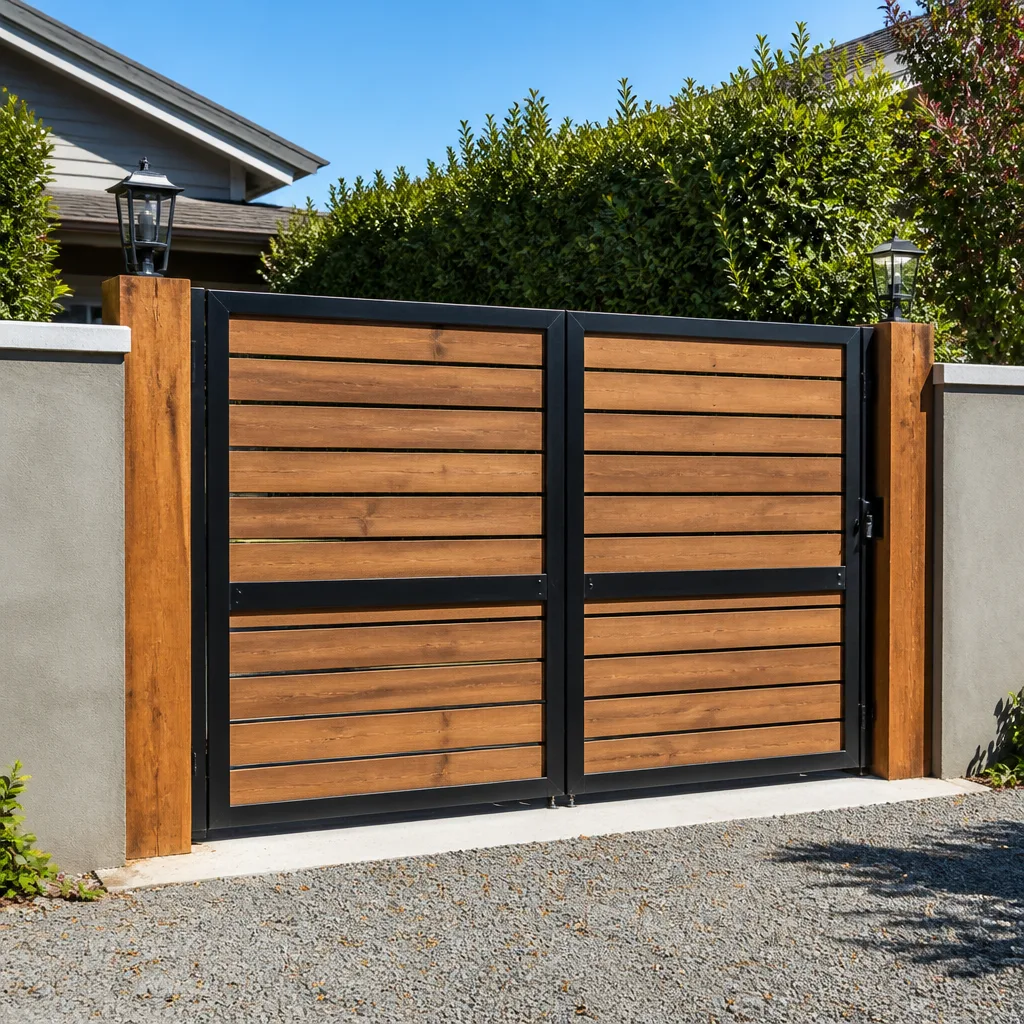 Wood & steel frame
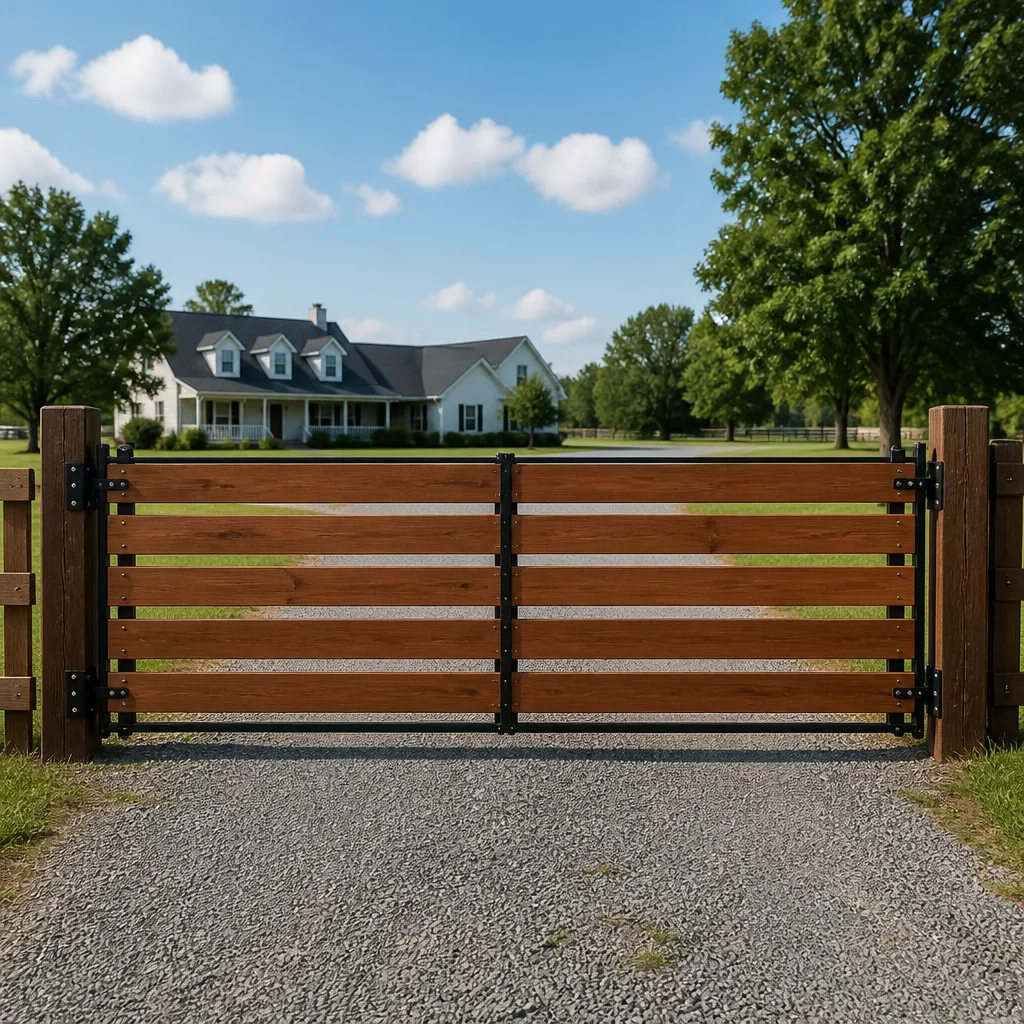 Farm & ranch
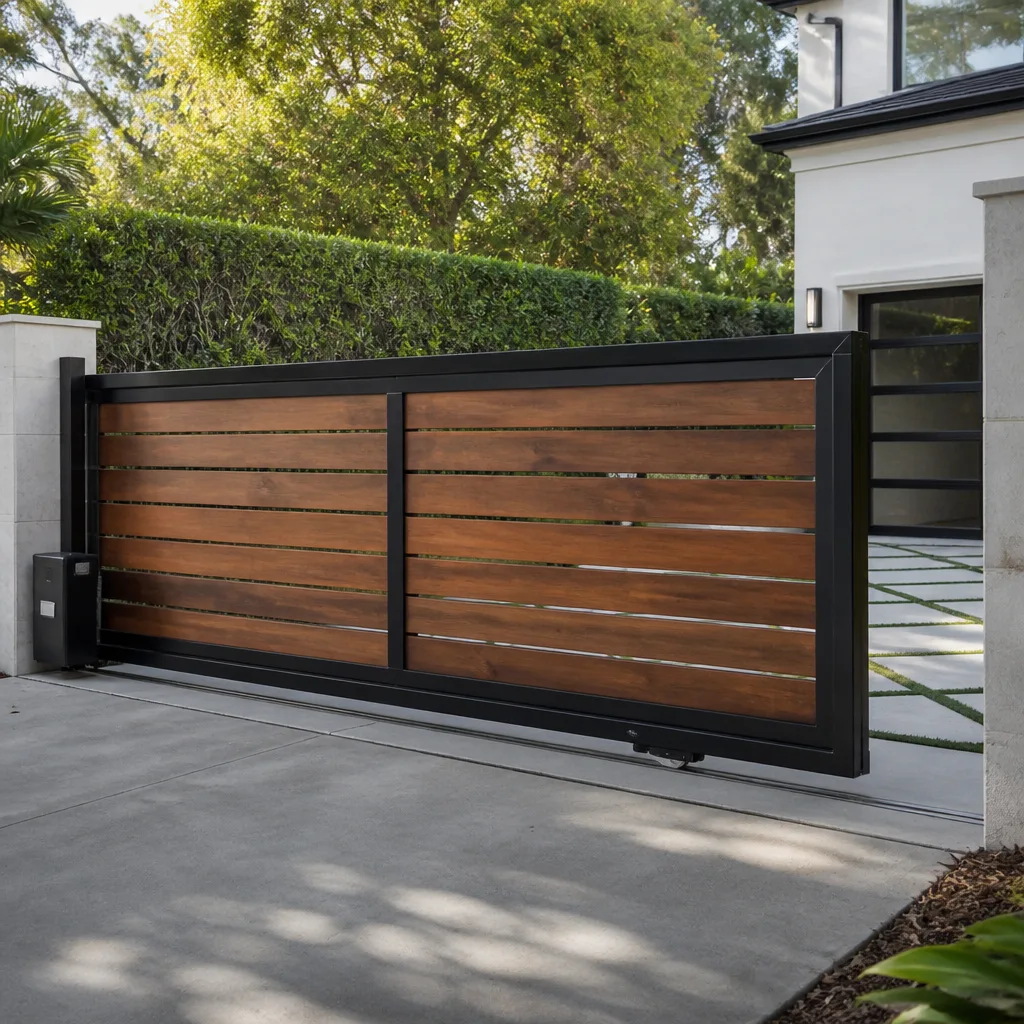 Sliding driveway gates
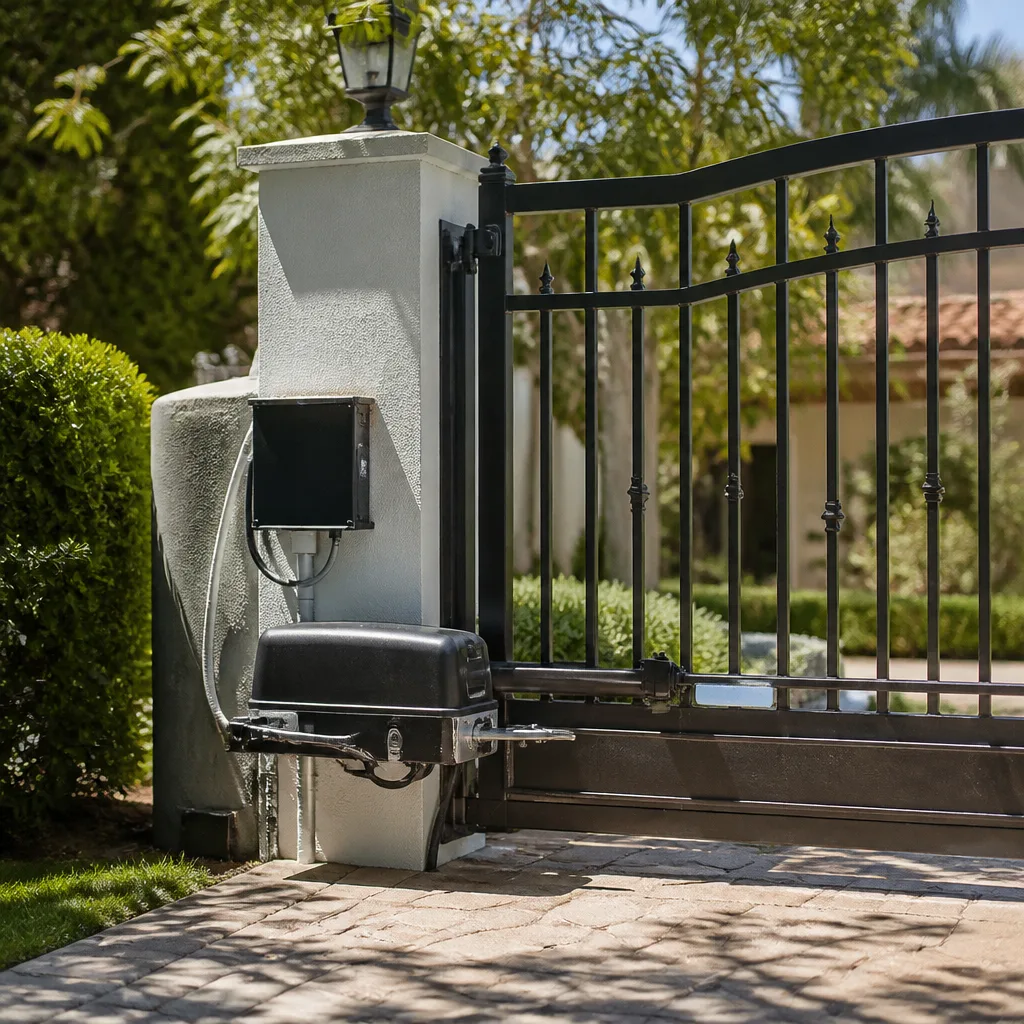 LiftMaster operators
Free on-site gate assessment - hinges, posts, and your LiftMaster or Nice gate operator checked before anything is quoted
The assessment is free and the quote is the invoice.
Get your free estimateGate Repair Maintenance Checklist for Upland Homeowners
Here’s the pattern we see in Upland week after week: a homeowner calls us because their electric gate stopped working, and when we open the operator housing, the limit switch contacts are corroded, the chain is dry, and the battery terminals have a white crust on them. All of it preventable. None of it touched in years. The frustrating part is that most Gate Repair Troubleshooting: Common Problems and How to Fix Them advice online treats every gate the same, which means swing gate owners get slide gate advice and solar gate owners get nothing at all. This guide changes that. You’ll learn what your specific system needs, how often it actually needs it based on how you use it, and which three maintenance items are the most commonly skipped in Upland.
Quick Answer
A Gate Repair maintenance checklist for an automated swing gate and one for a slide gate are not interchangeable, because the moving parts, failure points, and lubrication needs differ completely. For most Upland homes, the core checklist is: inspect hinges and operator mounts monthly, lubricate moving contact points every 3 to 6 months depending on usage cycles, test safety sensors and obstruction detection every 4 to 6 weeks, check solar panel output and battery terminals before summer, and schedule a specialist inspection whenever the gate slows down or sounds different. Usage load, not calendar months, should drive the schedule.
Styles & brands we work with
- Wrought iron
- Wood & steel frame
- Farm & ranch
- Sliding driveway gates
- LiftMaster operators
Table of Contents
- Usage-Based Scheduling vs. Calendar-Based Scheduling
- Swing Gate Operator: The Full Checklist
- Slide Gate Operator: The Full Checklist
- Manual Pedestrian Gate: The Full Checklist
- Lubrication Points and Correct Product Types
- Solar Panel Output Check: Before the Battery Dies
- The Limit Switch Contact: The Most Skipped Maintenance Item
- Common Mistakes to Avoid
- When to Call a Professional
- Frequently Asked Questions
Usage-Based Scheduling vs. Calendar-Based Scheduling
Most maintenance guides tell you to inspect your gate every six months. That works for some gates and fails for others. A driveway gate that cycles 40 times a day because the household has two commuters, a school drop-off, deliveries, and a gardener accumulates more wear in two months than a rarely-used estate entrance accumulates in two years. In Upland, where many homes sit on larger lots with secondary access gates, we see both extremes on the same property.
The better approach is to schedule maintenance by cycles. A cycle is one full open-and-close operation. Residential operators are generally rated for 20,000 to 100,000 cycles depending on the brand and model. A Ghost Controls or Mighty Mule residential operator on a busy family driveway might hit 1,200 cycles a month. A LiftMaster commercial-grade swing operator on a rarely-used side gate might hit 60 cycles a month. The first gate needs attention every two months. The second gate can honestly go a year.
Here’s the practical rule we give Upland homeowners:
- Over 1,000 cycles per month: Inspect monthly, lubricate quarterly, full professional check every 6 months.
- 300 to 1,000 cycles per month: Inspect every 2 months, lubricate every 4 months, professional check every 9 to 12 months.
- Under 300 cycles per month: Inspect quarterly, lubricate every 6 months, professional check annually.
You can estimate your cycle count by watching the gate for one day and multiplying. Most people in Upland are surprised by how fast the number adds up once they start counting. For the full picture on what we inspect during a professional visit, see our Gate Repair in Upland service page.
Swing Gate Operator: The Full Checklist
A swing gate is the most common residential automated gate in Upland, and it has failure points that don’t exist on slide gates. The operator arm is connected to the gate leaf at a pivot point that takes enormous force every single cycle. Here’s the checklist we walk homeowners through, in priority order:
- Check hinge play once a month. Grab the gate leaf at the free end and lift it. If it moves more than a quarter inch vertically, the hinges are wearing or the post is shifting. On a single-leaf gate, this is the single biggest predictor of operator failure, because the motor is working against a sagging leaf.
- Inspect the operator mount bolts every two months. The bracket where the operator arm attaches to the gate and to the post is under constant shear force. Loose bolts cause clunking noises and eventually tear out.
- Listen for a change in sound. A healthy swing operator makes a consistent, even hum. A change in pitch, a grinding sound, or a hesitation mid-travel means the operator is working harder than it should. That’s the early warning sign before failure.
- Check the leaf alignment. On a bi-parting swing gate, both leaves should meet cleanly in the center. If one leaf closes before the other or one sags, the alignment needs correction before the operator does.
- Test the obstruction detection. Place a small object like a trash can in the gate’s path and close the gate. It should stop and reverse on contact. If it doesn’t, that’s a safety issue and a service call, not a DIY fix.
- Inspect the control board for moisture. Upland gets less rain than the coastal areas, but condensation, sprinkler overspray, and morning fog still get into control enclosures. Look for corrosion on terminals, especially at the battery connections if the gate is solar-powered.
If your swing gate is making a groaning noise at the hinge end rather than the operator end, and the operator itself is a LiftMaster or Elite, the problem is usually mechanical, not electrical. We cover electric issues separately on our Electric Gate Repair in Upland page.
Slide Gate Operator: The Full Checklist
Slide gates have completely different failure points than swing gates. Instead of hinges and pivots, the gate rides on rollers along a track, and the operator drives the gate through a chain or rack-and-pinion system. The track is the biggest source of trouble in Upland, because debris, dust, and gravel from driveways and nearby hillsides collect in the track channel.
- Clear the track every two weeks during high-use months. Use a leaf blower, not a hose. Water pushes debris into the track channel and accelerates corrosion. If you live near the foothills where wind blows sand and dry leaves, this is a weekly task in summer and fall.
- Check the gate rollers every month. Wheels should roll smoothly without grinding or wobbling. A flat spot on a roller or a seized bearing forces the operator to push harder, which shortens the operator’s life.
- Inspect the chain tension every two months. A chain that sags more than an inch between sprockets needs adjustment. Too tight is also a problem: it overloads the motor bearings. This adjustment is best done by someone who knows the system, because the tension spec varies by brand.
- Check the rack-and-pinion engagement. If your slide gate uses a rack-and-pinion drive rather than a chain, look for worn teeth, gaps in engagement, or debris packed between teeth. A missing tooth on the rack means a skip in travel and eventual gear damage.
- Inspect the end stops. Physical end stops should be secure, with no cracks and no visible movement when the gate closes against them. A soft end stop is a hard repair later.
- Look at the guide rollers at the top of the gate. These keep the gate from leaning. If they’re worn or the gap is too wide, the gate leans and wears the wheel bearings unevenly.
One Upland-specific note: homes along Euclid Avenue and the older developments near downtown often have slide gates on narrow side yards where the track runs alongside a fence. Debris accumulates faster there because wind funnels through the space. Clear those tracks more often than a wide-open driveway track.
Manual Pedestrian Gate: The Full Checklist
Not every gate on an Upland property is automated. The pedestrian gate, the side yard gate, the pool gate: these are on manual hinges and latches, and they get forgotten because they don’t make noise when they fail. But a sagging pedestrian gate that drags on the ground wears out its hinges slowly, and then one day the latch no longer lines up with the strike plate, and the gate won’t close at all.
Here’s the checklist for manual gates:
- Check the hinge screws quarterly. Wood gates especially: the screws back out as the wood expands and contracts with temperature changes. Upland’s hot, dry summers and cooler wet winters are exactly the conditions that cause this. Tighten or replace screws before the hinge pulls loose entirely.
- Verify latch alignment. The latch bolt should slide into the strike plate cleanly. If it needs lifting or pushing to close, the gate is sagging. Fix the sag at the hinge, don’t move the latch.
- Look for wood-to-ground contact. Any part of a wood gate touching the ground will rot. Trim the bottom or adjust the hinges to keep at least an inch of clearance.
- Check for rust on metal pedestrian gates. Wrought iron gates in Upland last well, but weld points and hinges are the first places rust develops. Touch up surface rust before it becomes structural.
- Test the self-closing mechanism if there is one. Pool gates and some side gates have spring hinges. The gate should close fully and latch on its own from any position. If it doesn’t, the spring tension needs adjustment or the hinges need replacement.
When a manual pedestrian gate reaches the point of no return, replacement is often the better investment than repeated hinge and latch repairs. We handle both paths on our Gate Installation in Upland page.
Lubrication Points and Correct Product Types
The wrong lubricant does more damage than no lubricant. We’ve opened operators in Upland where someone sprayed WD-40 on everything, including the control board, and the residue attracted enough dust to short the board. Here’s the correct approach, by component type.
For hinges, pivot points, and roller bearings: Use a lithium-based white grease or a synthetic grease. Apply sparingly. Too much grease attracts dust and grit, which creates an abrasive paste that accelerates wear. A thin film is enough.
For chains on slide gate operators: Use a chain-specific lubricant, not a penetrating oil. A chain lube that clings and penetrates the rollers is what you want. Apply lightly and wipe off the excess. Penetrating oils like WD-40 wash out the existing lubricant and leave the chain dry.
For rack-and-pinion systems: Most rack-and-pinion drives are designed to run dry. Applying grease to a rack and pinion is one of the most common homeowner mistakes, because grease traps debris between the teeth and accelerates tooth wear. If the manufacturer specifies a lubricant, use exactly that product. If they don’t, keep it clean and dry.
What never to use on any gate component: WD-40 as a lubricant, cooking spray, motor oil, graphite spray on parts that get wet, and any aerosol that leaves a sticky residue. These products either don’t lubricate under load or they attract contamination.
If you’re not sure which lubricant your system needs, the brand matters. A FAAC hydraulic swing operator has different lubrication requirements than a Mighty Mule electromechanical arm. Using the wrong product on the wrong component is a $300 repair that was avoidable.
Solar Panel Output Check: Before the Battery Dies
A solar-powered gate in Upland has an advantage: the sun up here is consistent, especially compared to coastal fog zones. But solar panels don’t fail suddenly; their output drops gradually as dirt accumulates, and the battery drains below the threshold that can complete a cycle. By the time the gate shows symptoms, it’s often mid-cycle, with the gate stuck in the open position and a car waiting on the other side.
The check is simple and takes five minutes:
- Look at the panel surface. Dust, bird droppings, and pollen reduce output. In Upland, with our dry summers and occasional Santa Ana winds, panels can coat quickly. Clean with water and a soft cloth, no abrasives.
- Check the angle. The panel should face south with a tilt that matches our latitude, roughly 30 to 35 degrees. A panel that has shifted or been bumped is losing output every single day.
- Inspect the wiring from panel to control board. Look for cracking insulation, corrosion at the connections, and any place where wiring rubs against the gate or the post. A rubbed wire is a short waiting to happen.
- Look at the battery terminals. White or blue crust on the terminals is corrosion. It increases resistance, which means the battery doesn’t charge fully even when the panel output is fine.
- Check the control board’s battery indicator if available. Many FAAC and LiftMaster solar-ready systems show battery voltage on the board display or through a diagnostic LED. If voltage is below the manufacturer’s minimum, replace the battery before it fails mid-cycle.
Solar batteries typically last 3 to 5 years in Upland’s heat, not the 7 to 10 years a battery in a cool marine climate might last. Heat is the enemy. A battery that reads fine in December can fail during the first September heat wave after a long hot season. If your gate is solar-powered, plan the battery replacement proactively every 4 years rather than reactively when it dies.
The Limit Switch Contact: The Most Skipped Maintenance Item
Every automated gate operator has limit switches, or their modern equivalent, that tell the operator where the gate should stop. On older electromechanical operators, these are physical contacts on a shaft that rotate as the gate moves. On newer systems, they’re often magnetic sensors or position encoders. In every case, they have one job: stop the gate at the correct position.
Here’s what happens when limit switch contacts corrode or drift out of adjustment: the operator doesn’t know where the gate is. It runs too long or too short, slamming the gate into the end stop or failing to close completely. The control board sees the fault and can enter a locked-out state. In our experience, this is the most common cause of a “dead” operator that actually has a perfectly fine motor.
The maintenance item is simple: keep the contacts clean and properly adjusted. On an electromechanical system with physical contact points, that means periodic inspection of the contact surfaces and adjustment when the gate stop position drifts. On magnetic sensor systems, it means keeping the sensor and magnet clean and checking the gap between them.
What makes this the most commonly skipped item is that it requires opening the operator housing, and most homeowners in Upland are understandably hesitant to open an electrical enclosure. That hesitation is reasonable. The result is a $600 operator replacement for what could have been a contact cleaning and adjustment. Not every component is a DIY job, and this is the one where the line between homeowner inspection and professional service is clearest.
Common Mistakes to Avoid
- Lubricating a rack-and-pinion drive. Grease on a rack attracts debris and accelerates tooth wear. Keep it clean and dry unless the manufacturer says otherwise.
- Using a calendar instead of a cycle count. A gate that cycles 40 times a day needs a different maintenance schedule than one that cycles 40 times a week. In Upland, where daily commuters and home-based workers coexist on the same streets, the variance is enormous.
- Ignoring a slow gate. A gate that moves slower than it used to is telling you something. It’s not a preference change, it’s a load increase. Waiting until it stops entirely costs more.
- Replacing the battery before checking the panel. If the solar panel is coated in dust or the wiring is corroded, a new battery won’t solve the problem. Diagnose the charging circuit before spending on a battery.
- Trying to fix obstruction detection sensors with adjustments alone. When a photo eye or safety loop fails, the system should default to a safe state. Attempting to bypass or over-adjust a safety sensor is dangerous and, in many cases, a code violation.
- Assuming all brands use the same maintenance intervals. A Ghost Controls residential operator and a FAAC commercial swing operator are built to different duty cycles. The maintenance schedule that keeps a Ghost Controls gate running is inadequate for a professional-grade FAAC system.
When to Call a Professional
Some findings on a maintenance checklist are homeowner-addressable: tightening a hinge screw, clearing track debris, wiping down a solar panel. Others cross the line into specialist territory immediately. If the gate has changed its sound, is jerking or hesitating mid-travel, or the operator housing shows moisture stains or melted-component smells, stop and call. Electrical work on gate operators involves line voltage, stored-energy springs, and a moving gate leaf that weighs hundreds of pounds. The risk is not worth the diagnostic guesswork. Falcon Gate Repair offers free estimates in Upland, and our technicians work on your specific brand from the start. Call (833) 918-6938 and describe what you’re seeing; we’ll tell you whether it’s urgent or something you can finish checking yourself.
Frequently Asked Questions
Maintenance intervals should be based on usage cycles, not calendar months. A busy driveway gate that cycles over 1,000 times a month needs monthly inspection and quarterly lubrication, while a rarely-used side gate can go a year between full inspections. Start by estimating your cycles per day, then call (833) 918-6938 if you want a professional to set the right schedule for your specific operator brand.
The most common cause is limit switch failure or misalignment, which often presents as a dead operator even when the motor is fine. Corroded contacts or position sensors that have drifted out of adjustment confuse the control board. Get it checked before replacing the operator; in many cases, the fix is a cleaning and adjustment, not a replacement.
No. WD-40 is a penetrating oil that displaces the chain’s existing lubricant and leaves the chain dry within days. Use a chain-specific lubricant that clings to the chain rollers, and wipe off the excess. For rack-and-pinion systems, keep the rack dry unless the manufacturer specifies otherwise.
Look at the panel surface for dust and debris, verify the panel angle is still facing south at roughly 30 to 35 degrees, inspect the wiring for cracks or corrosion, and check the battery terminals for crust. If the battery is over 4 years old in Upland’s heat, consider proactive replacement. For a full check, call (833) 918-6938 and we’ll test the charging circuit end to end.
Swing gates need hinge play checks, operator mount inspection, and leaf alignment monitoring. Slide gates need track clearing, roller inspection, and chain or rack engagement checks. The failure points are completely different, which is why a one-size-fits-all maintenance checklist is unreliable.
We work on a range of residential and commercial systems with certified working knowledge of major brands, including LiftMaster, FAAC, BFT, Linear, Viking, Ghost Controls, DoorKing, Elite, and Mighty Mule. Whether your gate is a residential entry-level operator or a professional-grade commercial system, our brand-specific approach means we diagnose by the system’s logic, not by guesswork. See our Gate Repair in Upland page for the full scope.
The Bottom Line
Gate maintenance in Upland is not a quarterly checklist you print and forget. It’s a system-specific practice driven by how much you use the gate, which type of gate you have, and the conditions your specific property creates. The homeowner who clears a slide gate track every two weeks in the summer and checks their solar panel output before battery failure season will get years more service from their operator than the homeowner who waits for symptoms. Start with the usage-based schedule, apply the right checklist for your gate type, and when a finding crosses into electrical or structural territory, call a gate specialist before a small adjustment becomes an operator replacement. Browse our more guides & resources to keep learning. Falcon Gate Repair works on your brand specifically, from the motor to the control board, and we handle both repair and replacement. For a free estimate in Upland, call (833) 918-6938.
Written by the team at Falcon Gate Repair, serving Upland since 2018. To learn more about our approach, visit the Falcon Gate Repair home page or contact us directly.
See the difference
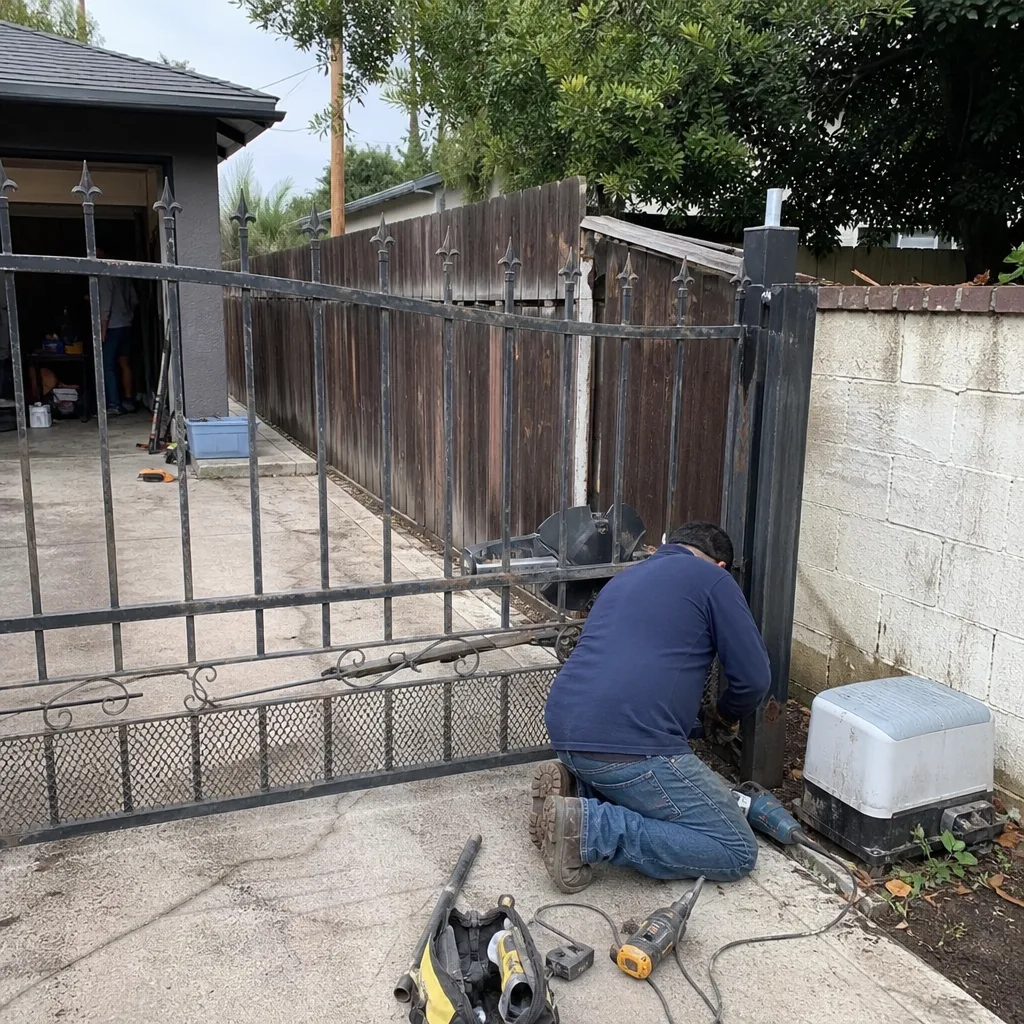 Before
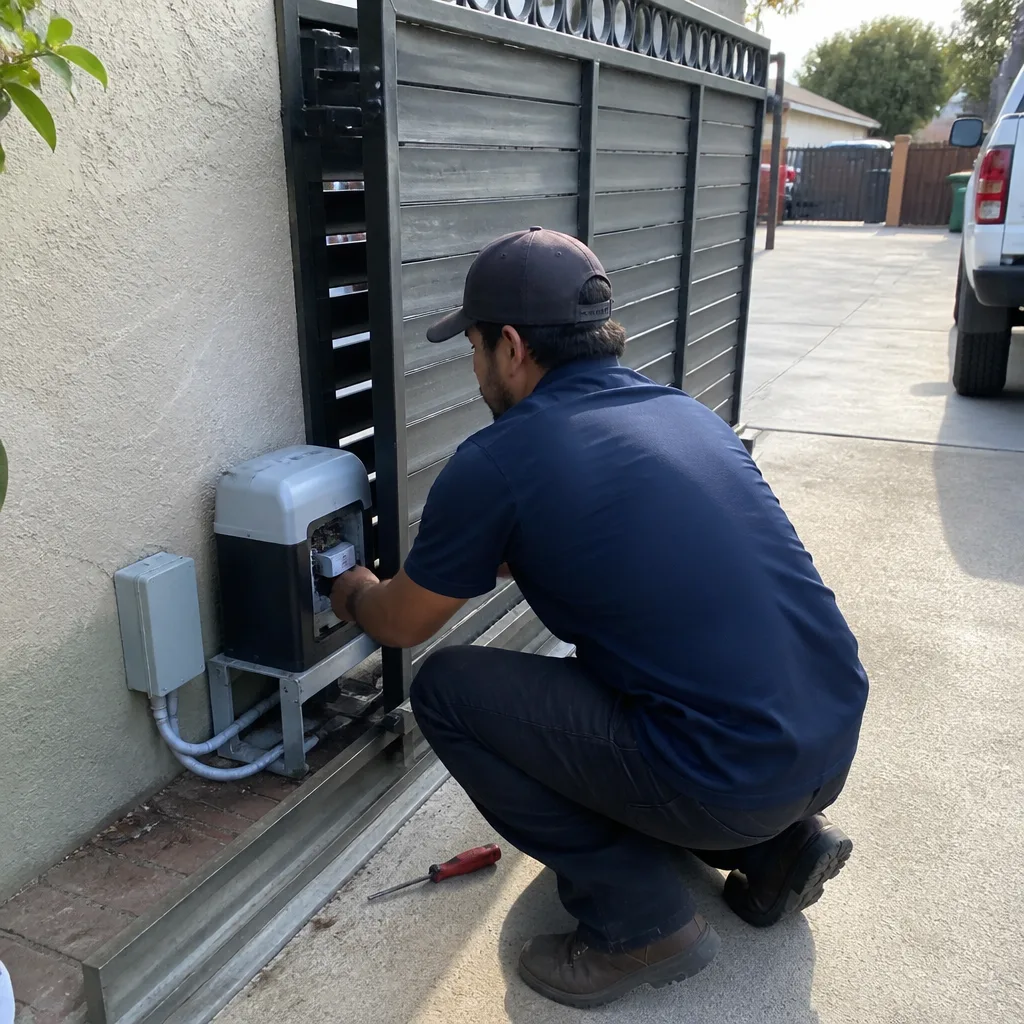 After
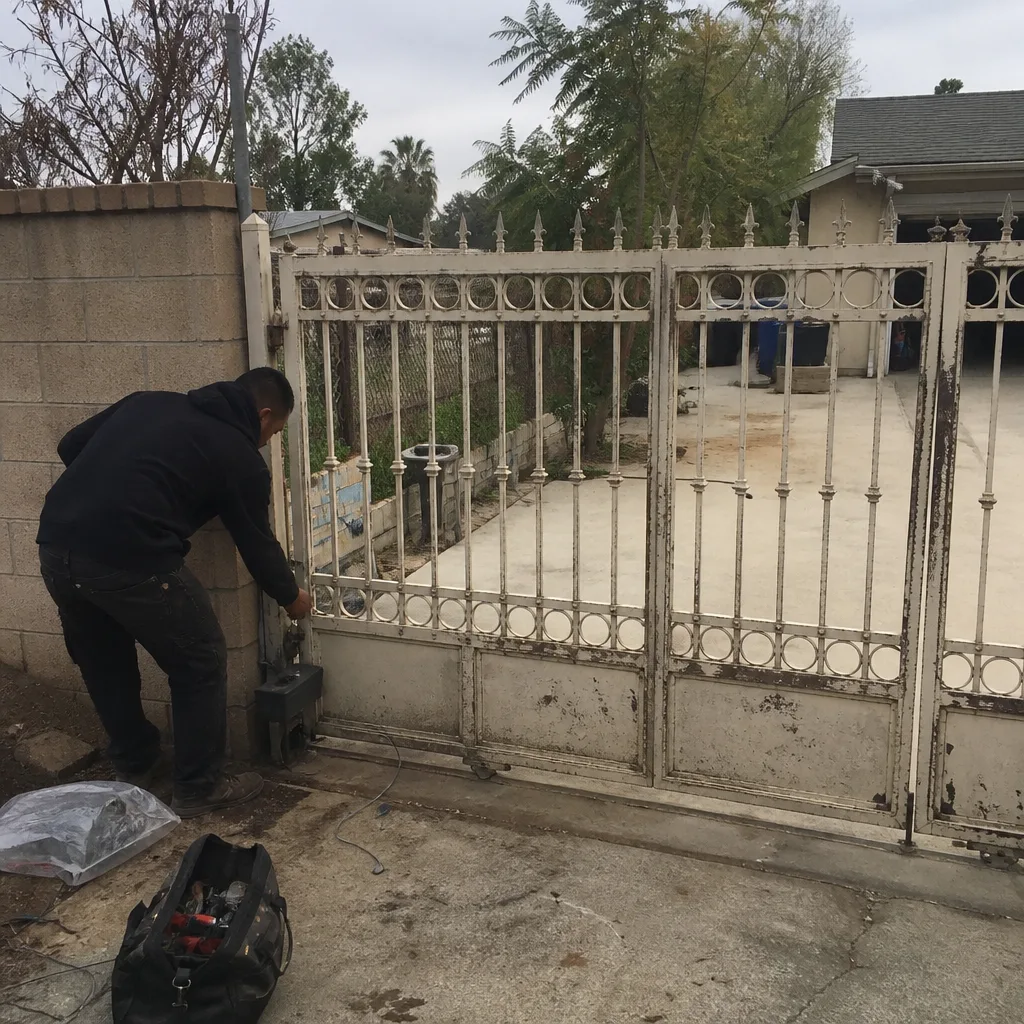 Before
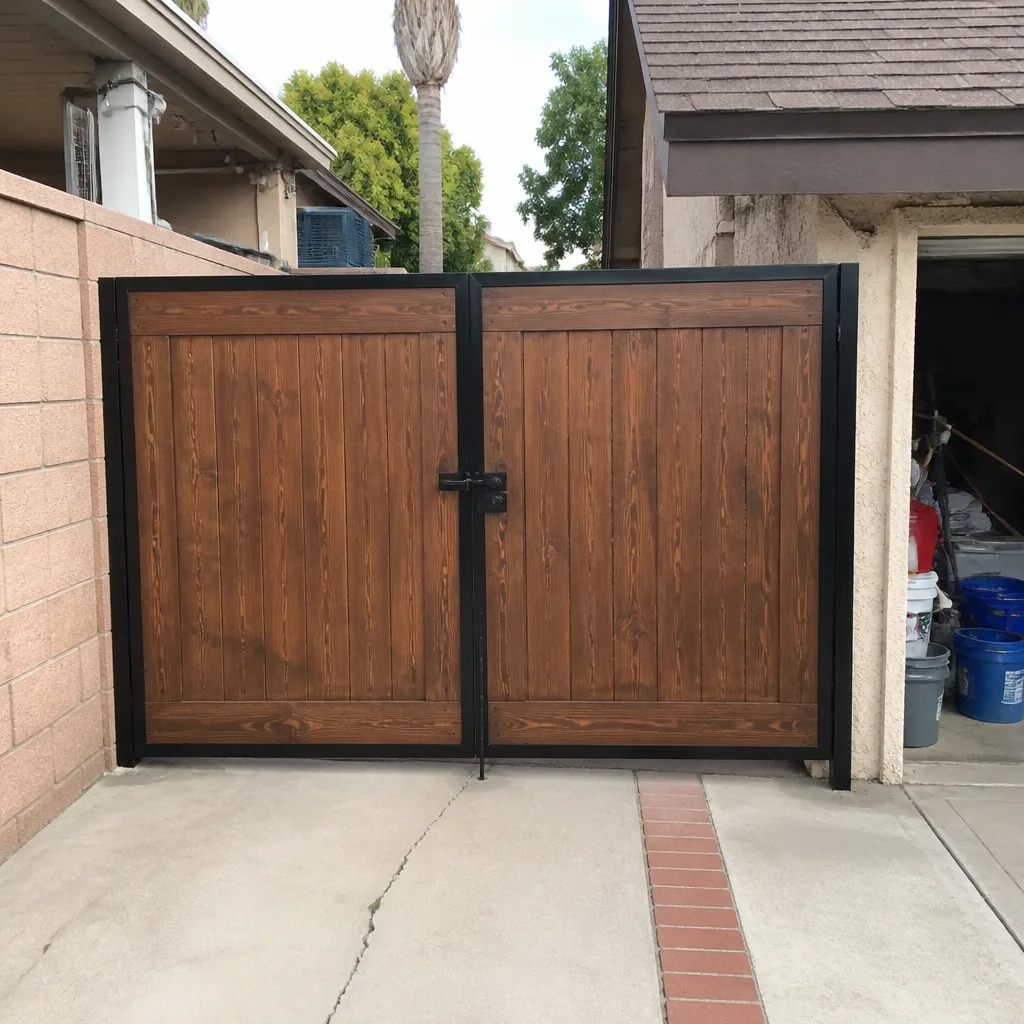 After
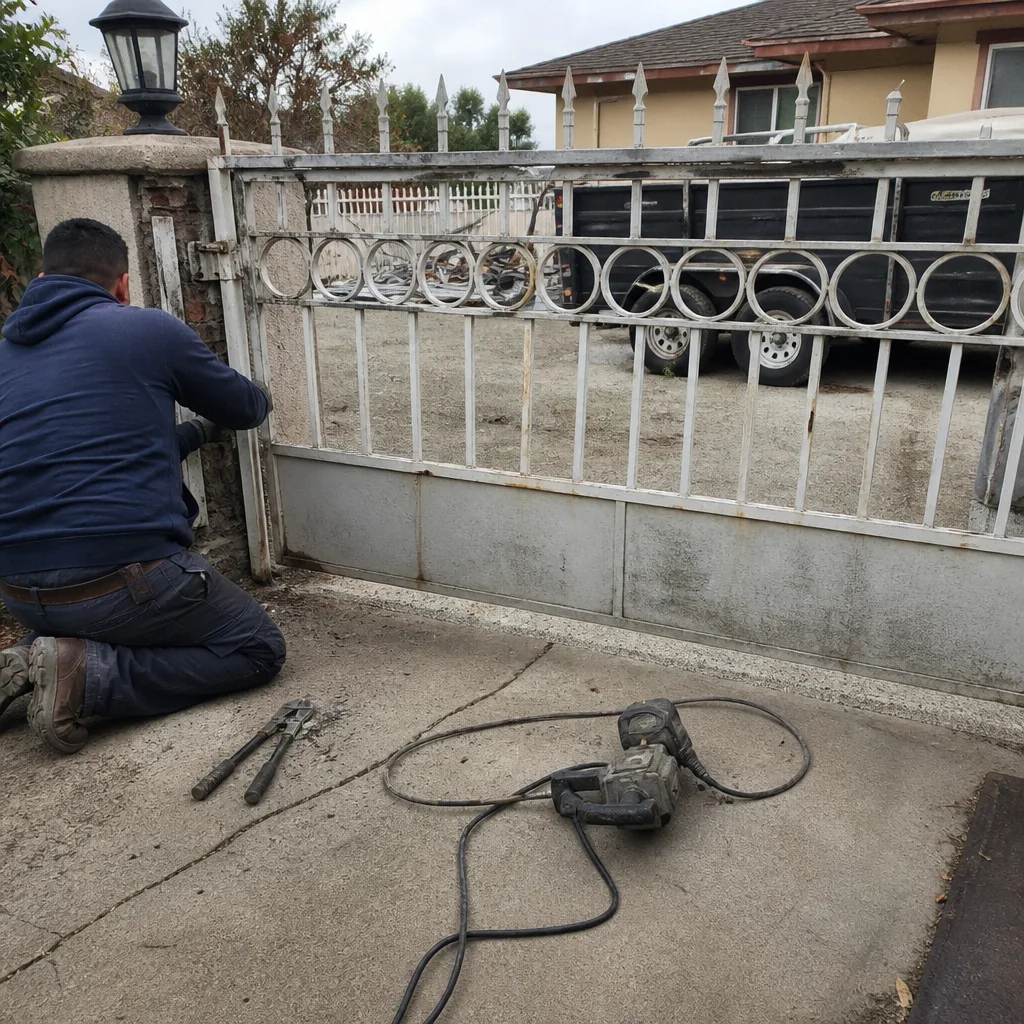 Before
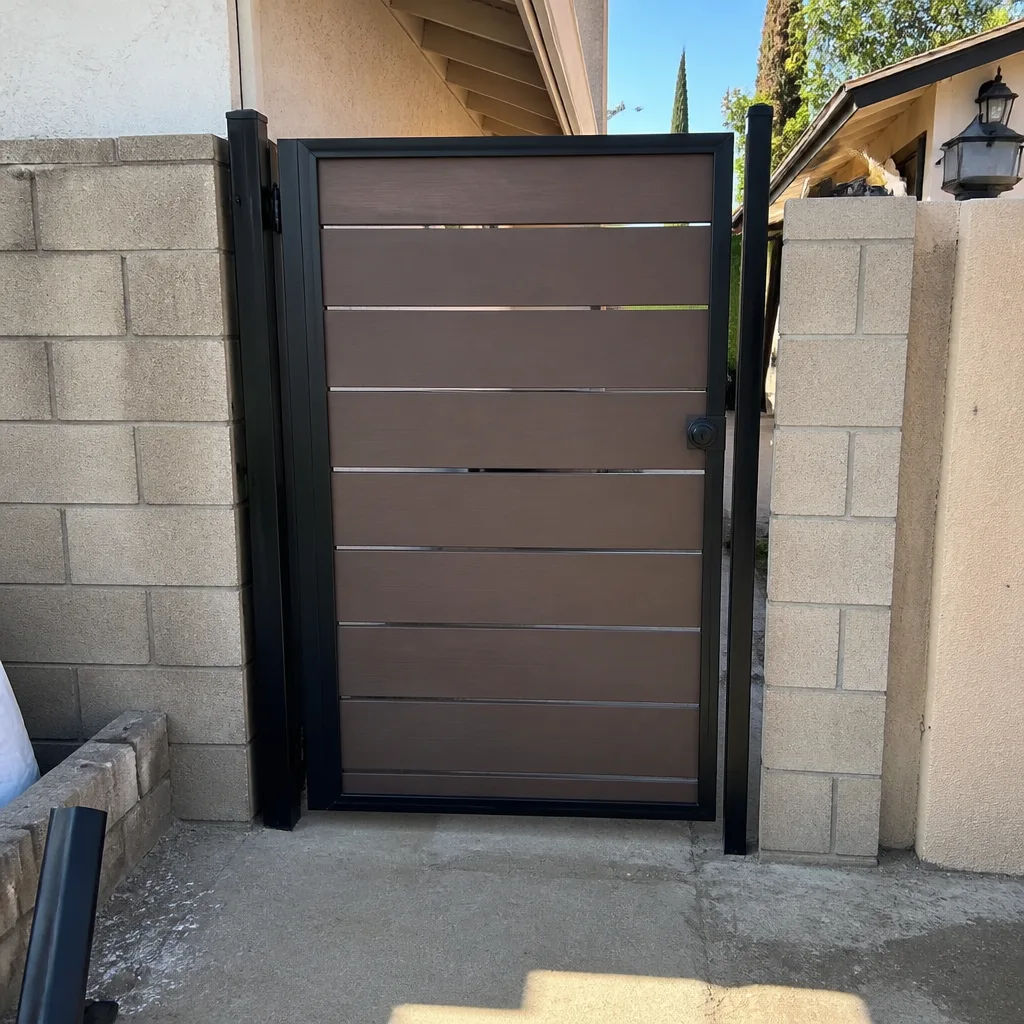 After